A knee replacement recovery timeline runs on two clocks at once. The calendar says most people are back to daily activities in 3 to 6 weeks and driving in 4 to 6. Your knee keeps its own schedule, set by how well it straightens, how far it bends and how strongly your thigh muscle switches back on. This guide walks through both, so you can tell the difference between a slow week and a real sign you need more help.
How long does knee replacement recovery take?
Most people return to everyday activities within 3 to 6 weeks of a total knee replacement and keep improving for several months after that. The American Academy of Orthopaedic Surgeons (AAOS) puts daily living at 3 to 6 weeks and driving at roughly 4 to 6 weeks (AAOS OrthoInfo, Total Knee Replacement). Swelling usually settles from moderate to mild over the first few weeks and can linger at a mild level for about 3 to 6 months (AAOS OrthoInfo, Activities After Knee Replacement). The UK’s National Health Service says a full recovery can take several months or longer, depending on your age and general health (NHS, Knee replacement recovery).
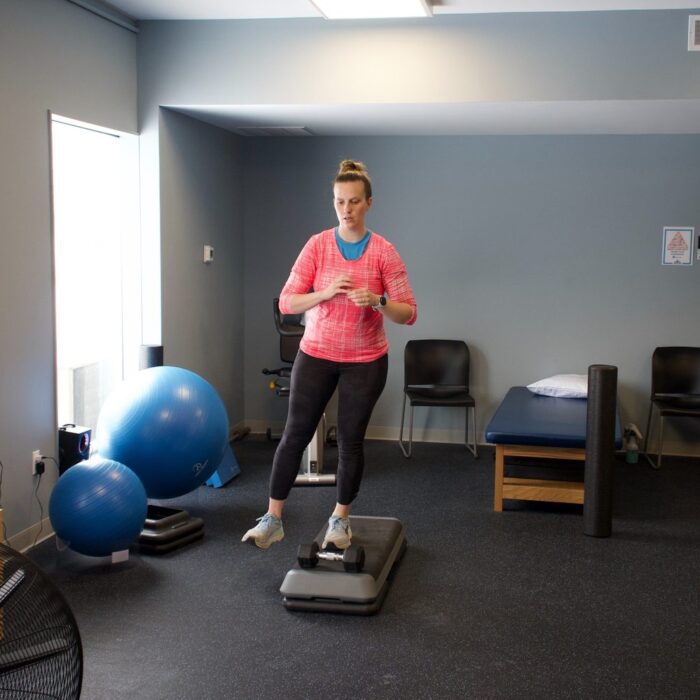
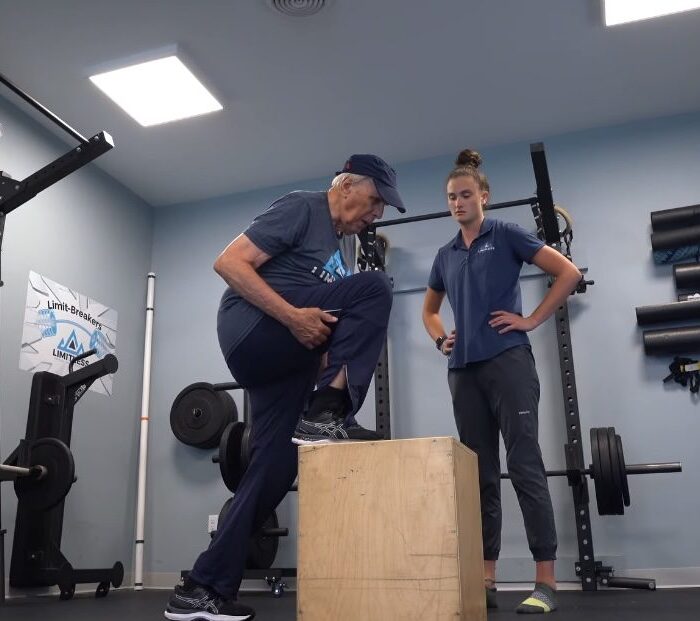
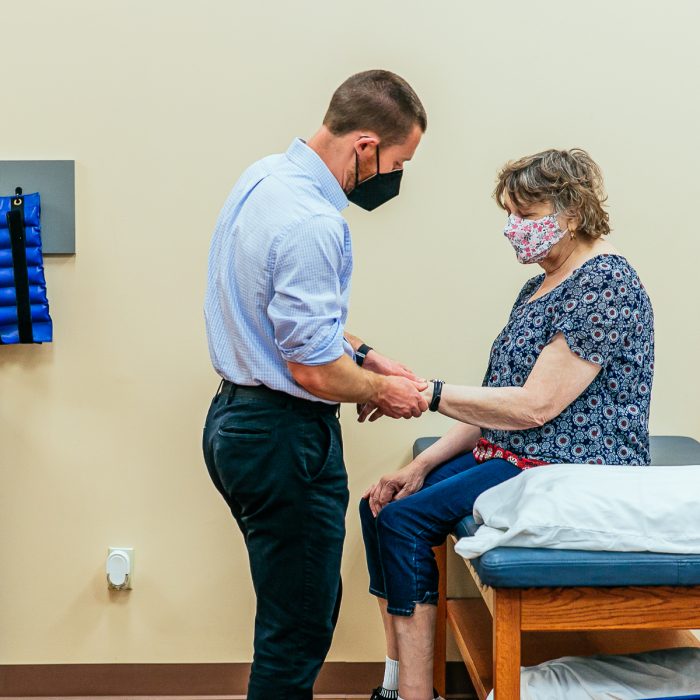
Limitless Physical Therapy Specialists provides post-surgical knee rehabilitation at five clinics across the Rochester area and Cortland, NY, and the milestones below are how a physical therapist tracks where you actually are.
- Days 1 to 14: walking with a walker or crutches, controlling swelling, getting the knee straight
- Weeks 3 to 6: most daily activities, stairs, and for many people driving again
- Weeks 6 to 12: walking without an aid, building real strength, longer outings
- Months 3 to 6: swelling fading, endurance and balance catching up
- Beyond 6 months: continued gains in strength and confidence on low-impact activity
Why your milestones matter more than the calendar
Week-by-week charts are useful, but they hide something important. Two people can both be “at week four” and be in very different places, because recovery after a knee replacement is gated by what the knee can do, not by how many days have passed. A calendar tells you when most people reach a milestone. It cannot tell you whether you have reached it.
That is why we think of recovery as four gates. Each one opens up the activities behind it, and each one is something you can check yourself.
Gate 1: The knee straightens fully
Getting the knee flat is the first priority and the one people most often let slide, because bending feels like the bigger goal. A knee that stays slightly bent makes every step work harder and keeps your gait uneven. AAOS notes that most patients can expect to almost fully straighten the replaced knee. If yours still rests with a bend after the first couple of weeks, raise it with your therapist early.
Gate 2: The knee bends enough for real life
Bending opens up stairs, getting in and out of a car, and sitting in a normal chair. AAOS reports that an average of about 115 degrees of motion is generally anticipated after surgery, which is enough to climb stairs and get into a car comfortably. Full motion is uncommon, and stiffness is more likely if your knee was already stiff before surgery. Your number at week two matters less than whether it keeps climbing each week.
Gate 3: Your thigh muscle switches back on
The quadriceps often goes quiet after surgery, a reflex called arthrogenic inhibition. A simple self-check is the straight-leg raise: lying on your back, can you lift the operated leg without the knee sagging into a bend? When you can, your quadriceps is back in the game, and walking without an aid usually follows. Strength is also where the 2026 physical therapy guideline, covered below, puts much of its weight.
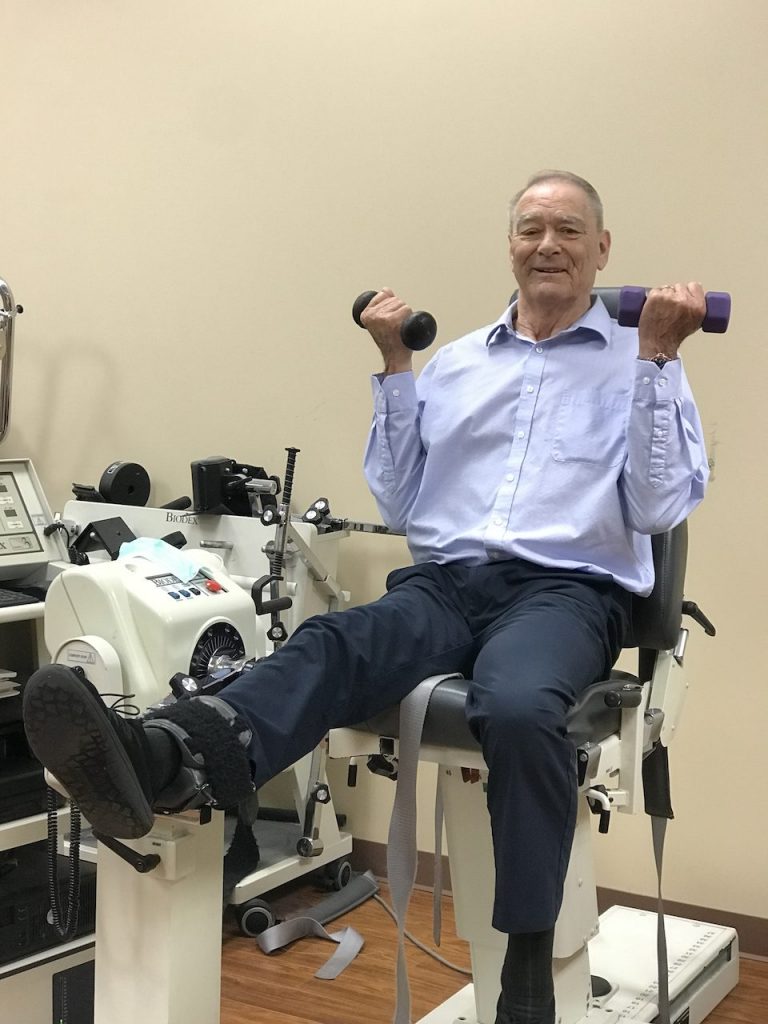
Gate 4: You walk without an aid, and without a limp
The NHS suggests trying to walk without an aid after about 6 weeks if you feel ready. The quality of the walk matters as much as the timing. Putting the cane down while still limping trains the limp. Keep the aid until your stride looks even, then drop it.
If you are behind on the calendar but moving steadily through the gates, you are recovering. If you are on schedule by the calendar but stuck at one gate for two or three weeks, that is the signal to adjust the plan, and a good moment to book a post-surgical physical therapy evaluation.
The knee replacement recovery timeline, stage by stage
The table below lines up each stage of the knee replacement recovery timeline with the gate that moves you forward. Treat the time ranges as averages from published sources, not deadlines.
| Stage | Typical window | What you are working on | The gate that moves you on |
|---|---|---|---|
| Hospital and first days home | Same day to about 3 days in hospital (AAOS) | Walking with an aid, ice and elevation, first exercises | Safe walking and transfers at home |
| Early recovery | Weeks 1 to 2 | Swelling control, straightening, gentle bending | Gate 1: knee straightens fully |
| Return to daily life | Weeks 3 to 6 | Stairs, longer walks, daily tasks, driving for many | Gate 2: bend for stairs and the car |
| Strength phase | Weeks 6 to 12 | Progressive strengthening, balance, walking without an aid | Gates 3 and 4: quad control and an even walk |
| Building capacity | Months 3 to 6 | Endurance, confidence on uneven ground, low-impact activity | Swelling mild or gone, activity tolerated well |
| Long term | 6 months onward | Keeping strength and staying active | Doing the things you love on the new knee |
One caveat that matters: these windows vary with your health before surgery, your motion before surgery, and whether you had a total or partial replacement. The NHS, for example, suggests waiting at least 6 weeks to drive after a total knee replacement and 3 weeks after a partial one. Your surgeon’s instructions override any table.
Weeks 1 and 2: what normal looks like
The first two weeks after a knee replacement are mostly about swelling, straightening and short, frequent walks. AAOS notes that pain with activity and at night is common for several weeks, and that most patients can begin exercising the knee within hours of surgery. Expect to need help at home with cooking, shopping, bathing and laundry for a while.
Ice and elevation do real work here. The 2026 guideline specifically recommends cryotherapy for early pain and positioning the leg raised with the knee bent somewhere between 30 and 90 degrees to manage swelling. Short, frequent walks beat one long, painful one.
What the 2026 physical therapy guideline says works
The American Physical Therapy Association published a revised clinical practice guideline for knee replacement rehabilitation in July 2026 (Bove and colleagues, Physical Therapy, 2026, volume 106, issue 7; summary at APTA). It grades each recommendation by the strength of the evidence, and several of its conclusions run against advice that still circulates online.
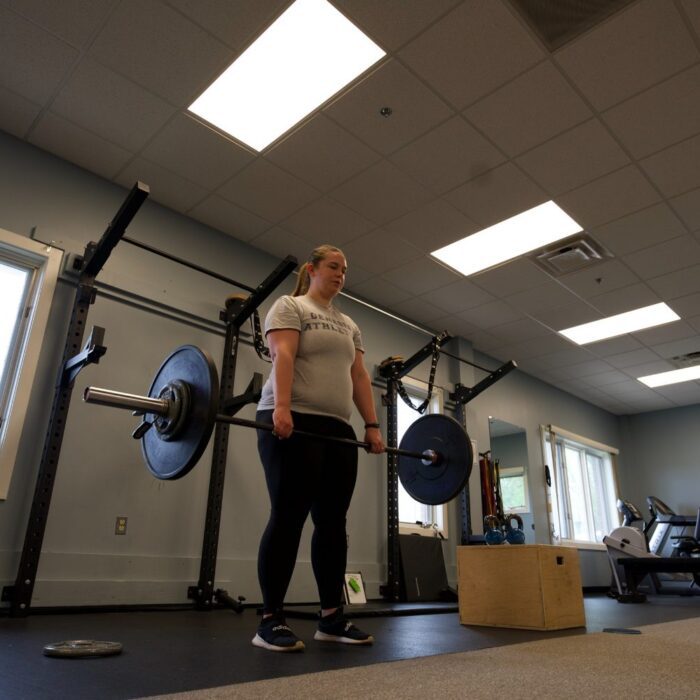
- Progressive strength training is a strong recommendation. The guideline tells physical therapists to design, implement and teach progressive strength training, backed by high-quality evidence. Patients who started progressive resistance work early still gained strength, and harms stayed minimal when progression rules were followed.
- Balance and motor function training is a strong recommendation. Teaching the leg to control movement again, not just to get stronger, is part of the plan from the start.
- Continuous passive motion machines are a strong “do not use”. The guideline recommends against CPM for improving knee range of motion, and against routinely bracing or splinting the knee early on.
- Electrical stimulation can help the quadriceps. Neuromuscular electrical stimulation applied at least daily to the quadriceps is a moderate recommendation, most useful for people whose thigh muscle is slow to switch back on.
- Supervised therapy is recommended. Supervised physical therapist management carries a moderate recommendation, and standard outpatient rehabilitation was associated with stronger function at 3 months than home-based programs in the studies reviewed.
- Digital tools are worth using. The guideline recommends considering digital health tools, and found telerehabilitation often matched in-person results.
The practical takeaway: the biggest gap between a good recovery and a frustrating one is usually strength that never got pushed far enough. Gentle range-of-motion exercises on repeat feel safe, but the evidence now says progressive loading, guided by how your knee responds, is what rebuilds a leg you trust. Done well, it does not mean more pain. The guideline’s own progression rules are built around avoiding excessive swelling and soreness.
Between visits, Limitless patients can use the Limitless Life App to follow their exercise program and track progress, which lines up with the guideline’s recommendation on digital support.
Can I do my knee replacement rehab at home?
You can and should do a lot of your rehab at home, because the daily exercises are where most of the work happens. The question is whether home exercise alone is enough. The 2026 guideline’s answer is that supervised care leads to better early results, largely because someone is adjusting and progressing the plan each week.
Cost and logistics are the other worry. Limitless works with nearly every major insurance carrier, including Medicare and Medicaid, and our billing team checks your coverage before your first appointment. After a knee replacement you will usually have a referral from your surgeon already, so getting started is mostly a matter of choosing the clinic closest to home.
If you are planning surgery or are already home recovering, you can request your first visit through our new patient form. Starting before surgery helps too, since the guideline recommends preoperative exercise programs, so ask our post-surgical rehabilitation team about beginning before your surgery date. For a broader picture of how sessions run, see what to expect from post-surgery physical therapy.
POST-SURGICAL KNEE REHAB
Stuck at one gate for a couple of weeks?
Our post-surgical team finds where your knee is in recovery, then progresses your plan week by week. We check your insurance before your first visit. Prefer to talk? Call (585) 869-5140.
Book your first visitMonths 3 to 6, and the long run
By the third month of a typical knee replacement recovery timeline, most people are walking without an aid and the focus shifts to endurance, balance on uneven ground and getting back into activities. AAOS recommends lower-impact activities such as walking, golf, bicycling and pickleball, and suggests avoiding high-impact activities like jogging, jumping and skiing. Swimming is a good option once the incision has healed and your surgeon clears it.
The long-term outlook is strong. AAOS reports that more than 90% of modern total knee replacements are still functioning well 15 years after surgery. If stairs still bother your other knee, our guide to knee pain going down stairs covers what usually helps.
Frequently asked questions
Is it normal for my knee to still be swollen at 3 months?
Yes. AAOS describes swelling as moderate to severe in the first days or weeks, then mild to moderate for about 3 to 6 months after surgery. Mild swelling that rises after a busy day and settles overnight is common. New or severe swelling, especially in the calf, should be reported to your doctor promptly.
When can I drive after a knee replacement?
Most people drive again about 4 to 6 weeks after surgery, once they are off opioid pain medication and can brake quickly. Your surgeon makes the final call.
Why does my new knee hurt more at night?
Night pain is one of the most common complaints in the first weeks, and AAOS lists pain at night alongside pain with activity as normal for several weeks after surgery. A few things tend to drive it. Swelling builds through the day and the knee often stiffens once you stop moving. Pain medication schedules can leave a gap overnight. Many people also sleep with the knee bent on a pillow, which is comfortable in the moment and works against getting the knee straight. Icing and elevating in the evening, a short walk before bed, and keeping the knee supported but straight usually help. If night pain is getting worse rather than better from week to week, mention it to your surgeon or therapist so they can check for a cause.
When can I stop using a walker or cane?
When you can walk without a limp and your thigh muscle can control the knee, which for many people is around 6 weeks. The NHS suggests trying without an aid at about that point if you feel ready, and your therapist can tell you when your walk is even enough.
READY TO LIVE A LIFE WITHOUT LIMITS?
About the Author
This article was written by Dr. Elisabeth Campbell, PT, DPT, OCS, Team Captain at Limitless Physical Therapy Specialists. Dr. Campbell is a board-certified Orthopedic Clinical Specialist who completed an orthopedic and sports physical therapy residency with URMC and spent nine years in Rochester, where she played a role in URMC’s knee, hip and spine rehabilitation programs. She brought Limitless to Cortland County, where she treats patients today. Learn more about Dr. Campbell and the Limitless team here.