Pinky-side wrist pain and pinky-side wrist numbness are two different problems, with different causes and different treatments. Most articles on ulnar wrist pain blur them together, which is why so many people arrive having read a lot and understood nothing.
The short version. Numbness and tingling in the little and ring fingers usually means the ulnar nerve is compressed, at the wrist or at the elbow. Pain on that side of the wrist, especially with gripping and twisting, usually means something structural: the cartilage complex, the joint surfaces, or a tendon.
Sorting which one you have is most of the work.
What is ulnar wrist pain?
Ulnar wrist pain is pain on the little-finger side of the wrist, and it has several possible sources rather than one.
A 2023 review in PubMed Central puts it plainly: ulnar-sided wrist pain can be caused by a number of problems, including ulnar impaction syndrome and triangular fibrocartilage complex injury (Im, 2023). That is the honest starting point. It is a region, not a diagnosis.
The usual suspects on that side of the wrist:
- TFCC injury. The triangular fibrocartilage complex is the cushion and stabiliser between the end of the ulna and the small wrist bones. Pain is typically worse with the wrist deviated toward the little finger and with rotation.
- Ulnar impaction. The end of the ulna loading against the wrist bones, often related to relative bone length, and often provoked by gripping with the wrist deviated.
- ECU tendon problems. The extensor carpi ulnaris runs in a groove on that side and can become irritated or unstable, sometimes with a snapping sensation.
- The DRUJ. The joint where the two forearm bones meet at the wrist, which hurts most with turning motions such as a doorknob or a screwdriver.
The nerve version, and why it feels different
If the dominant symptom is numbness, tingling or weakness rather than pain, the picture changes.
Ulnar tunnel syndrome is compression of the ulnar nerve at the wrist, in a narrow passage called Guyon’s canal. According to AAOS OrthoInfo, it produces numbness and tingling in the little finger and the outside of the ring finger, along with weakness of pinch and grip.
Two causes worth knowing because they are so specific:
- A ganglion cyst is the most common cause. AAOS names it directly: the most common cause of ulnar tunnel syndrome is a soft tissue mass pressing on the nerve, typically a benign ganglion cyst arising from the wrist joint. Which is why imaging is often part of the workup rather than optional.
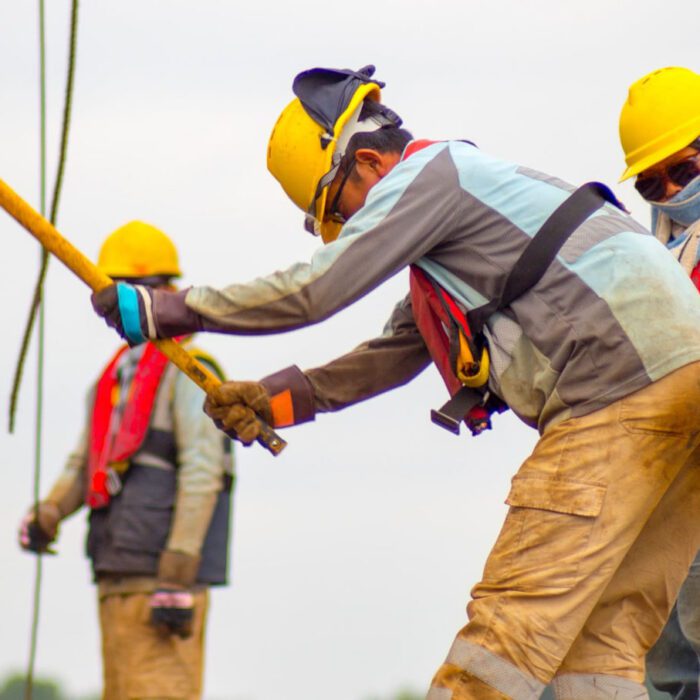
- Chronic pressure through the palm. AAOS gives two textbook examples: operating a jackhammer or similar power tools, and long-distance cycling with body weight resting through the palm on the handlebars. If you cycle and your little fingers go numb, you have just found your answer.
The nerve also passes through a narrow tunnel at the elbow, so AAOS notes that the elbow gets examined too, since pressure there causes the same hand symptoms.
Pain or numbness: a working table
| What you notice | Points toward | Typical provoking action |
|---|---|---|
| Deep ache, worse gripping and twisting | TFCC, ulnar impaction or the DRUJ | Wringing a cloth, using a screwdriver, push-ups |
| Clicking or snapping on that side | ECU tendon, or an unstable joint | Rotating the forearm |
| Numbness or tingling, little and ring fingers | Ulnar nerve, at the wrist or elbow | Leaning on the palm, or a bent elbow |
| Weak pinch, trouble spreading the fingers | Ulnar nerve, further along | Turning a key, opening a jar |
| Colour change in the fingers alongside numbness | Blood flow involvement. Get this looked at | Repeated impact through the palm |
| Pain after a fall onto the hand | Possible fracture or acute TFCC tear | Any weight through the wrist |
That last row matters. Ulnar-sided pain that began with a fall deserves imaging rather than a wait-and-see approach.
HAND THERAPY IN PENFIELD
Pinky-side wrist pain that will not settle?
This is a region with several possible causes and they need different plans, so a real assessment saves months of guessing. Our Penfield hand therapy team will narrow it down and say honestly if you need imaging first.
What treatment looks like
For the nerve version, AAOS is clear that nonsurgical treatment depends on what is causing the pressure, and the examples given are all about removing the cause: changing wrist position when typing, adding padding, altering technique with power tools, changing hand position on handlebars or padding between wrist and handlebar. NSAIDs and short-term wrist splinting may help. Where a cyst or a genuinely narrow tunnel is the cause, surgery is often needed to remove the mass or open the tunnel.
For the structural version, the first job is protecting the aggravated tissue while keeping the rest of the limb working: managing the grip-plus-rotation loads that provoke it, sometimes splinting or a support, then a graded return to loading. Where imaging shows a tear or an impaction problem that is not settling, a hand surgeon’s opinion is the next step.
Recovery expectations for the nerve are worth setting honestly. AAOS notes that after the pressure point is addressed it can take several months to a year for a nerve to recover fully, that recovery may be incomplete in older patients with longer-standing compression, and that some muscle weakness may not be fully reversible. Which is an argument for getting numbness assessed sooner rather than treating it as background noise.
Where hand therapy fits
Hand therapy’s certified scope covers the hand, wrist, elbow and shoulder girdle, which matters here because the ulnar nerve travels the whole length of that territory and can be compressed at more than one point along it.
What a good assessment does: works out whether you are dealing with pain or nerve symptoms, identifies the provoking load, checks the elbow as well as the wrist, and flags whether imaging or a surgical opinion should come before a therapy plan. Our hand therapy team runs from the Penfield clinic, and where the driver sits further up the chain the plan runs with our orthopedic physical therapy.
Across fifteen years and more than 5,000 patients and athletes treated, ulnar-sided wrist pain is one of the areas where people have most often been told “it is just a sprain” and left with it for a year. It is usually more specific than that, and specificity is what makes it treatable. If you want it narrowed down, request an appointment.
Frequently Asked Questions
Why does the pinky side of my wrist hurt?
The most common structural causes are a TFCC injury, ulnar impaction, an irritated ECU tendon, or the joint between the two forearm bones. A 2023 PubMed Central review names ulnar impaction syndrome and TFCC injury as leading causes of ulnar-sided wrist pain specifically. If the dominant symptom is numbness rather than pain, the ulnar nerve is the more likely candidate, and that is a different problem.
Will ulnar wrist pain go away on its own?
Mild irritation from a specific overload often settles once the load changes. Pain that began with a fall, or that has persisted for months, generally needs assessing.
What causes numbness in the little finger?
Compression of the ulnar nerve, most often at the elbow or at the wrist. At the wrist, AAOS names a benign ganglion cyst as the most common cause, which is why imaging is frequently part of the workup rather than an afterthought. Chronic pressure through the palm is the other classic cause, and the two examples AAOS gives are power-tool use and long-distance cycling with weight through the handlebars. Because the nerve passes through a narrow tunnel at the elbow as well, a proper examination checks both.
Can I keep lifting with ulnar wrist pain?
Often yes, with modification rather than rest. Grip combined with wrist deviation and rotation is usually the provoking combination, so changing the grip or the implement frequently allows training to continue.
How long does a TFCC injury take to heal?
It depends heavily on whether the injury is traumatic or degenerative, and on how much load the wrist has to take. What matters more than a number is knowing which you have, because a degenerative problem related to how the joint loads is managed differently from an acute tear. Diagnosis is usually clinical, with ulnar-sided pain that worsens on deviating the wrist toward the little finger, and MRI is used to confirm. If several months of load management has not changed anything, that is the point to seek a hand surgeon’s opinion rather than continuing to wait.
READY TO LIVE A LIFE WITHOUT LIMITS?
About the Author
This article was written by Dr. Tommy Quinzi, PT, DPT, OCS, at Limitless Physical Therapy Specialists. Dr. Quinzi earned his Doctorate of Physical Therapy from SUNY Upstate Medical University in 2017 and completed a 12-month residency through Evidence In Motion to become a board-certified Orthopedic Clinical Specialist (OCS). He holds ICE certifications in orthopedics and fitness athlete care. Learn more about Dr. Quinzi and the Limitless team here.