Hand therapy is not really about hands. The professional body that defines the specialty describes it as the rehabilitation of the upper limb, and that scope runs from the fingertips all the way up to the shoulder girdle (American Society of Hand Therapists Scope of Practice, 2011, quoting the Journal of Hand Therapy, 2009;22:361-376). The name costs people care. Someone whose pain travels between the shoulder, elbow and wrist reads “hand therapy” and decides it is not for them, when they are describing almost exactly what the specialty was built to treat.
If you are searching for hand therapy near you in the Rochester area, here is what the specialty actually covers, how to tell which kind of provider fits your situation, and what it takes to get started.
What is hand therapy?
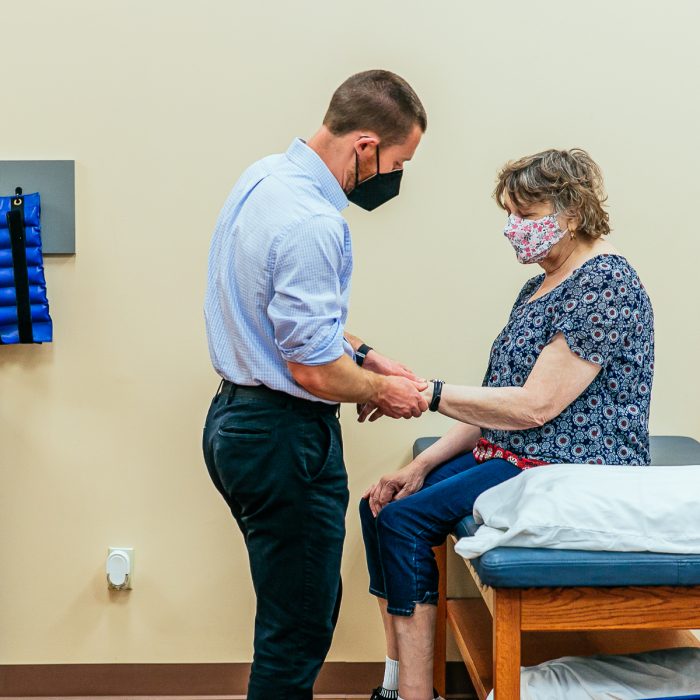
Hand therapy is the assessment and treatment of the upper limb, including the hand, wrist, elbow and shoulder girdle, delivered by an occupational therapist or a physical therapist with advanced training in that region.
It sits between two things people already know. It uses the hands-on treatment, movement retraining and progressive loading you would recognize from physical therapy, and it adds region-specific skills that general practice does not usually carry, such as custom orthotic and splint fabrication, scar tissue management, sensory re-education after a nerve injury, and wound care. The American Society of Hand Therapists lists all of these in its published scope, along with ergonomic assessment and return-to-work conditioning.
What a hand therapist works on, in practice:
- Restoring range of motion after an injury, a fracture or surgery
- Rebuilding grip and pinch strength for real tasks, not just for a chart
- Making and fitting custom orthotics to protect or reposition a joint
- Retraining sensation after a nerve is compressed or repaired
- Changing how you load the limb at work so the problem stops recurring
Hand therapy is not just hands, and that is the part most people get wrong
Read through the hand therapy pages of most clinics and you get a list: trigger finger, carpal tunnel, thumb arthritis, tendon repairs. All accurate. All incomplete, in a way that matters.
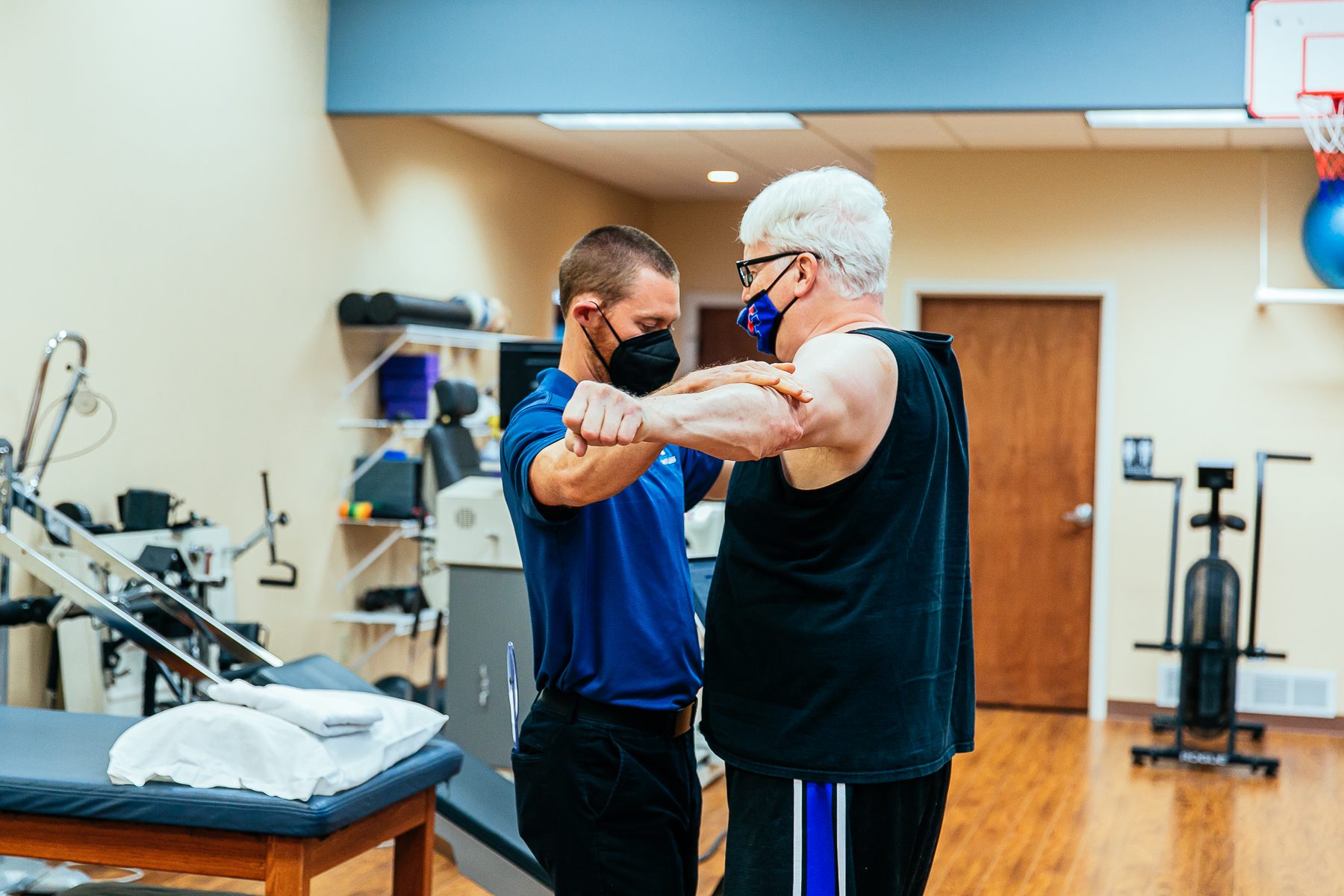
The published definition names the shoulder girdle. Not as a footnote, as part of the scope. That is because the upper limb behaves as one linked system. A stiff shoulder changes how you reach, which changes how your elbow and wrist absorb load, which is often where the pain finally shows up. Treat the painful joint alone and you can get short-term relief that keeps coming undone.
This is our honest disagreement with how the specialty is usually marketed. Naming it “hand therapy” makes it sound like a narrow finger clinic, and that framing sends people with the most treatable presentations somewhere else. Three examples we see constantly in Rochester:
- Pain that travels. An ache that runs from the shoulder down toward the elbow, or wrist pain that only appears after a long day of overhead work. One region hurts, another region is causing it.
- Night symptoms. Hand numbness or tingling that wakes you up. The hand is where you feel it. The nerve may be compressed anywhere along its path.
- Elbow problems mislabeled as sports injuries. Tennis elbow shows up far more often in people who have never held a racket, usually in gripping and lifting work.
None of this means you have something serious. It means the limb is a chain, and you get better answers when the person assessing you is trained on the whole chain. If you want a sense of the usual arc, our guide to how long upper limb pain usually takes to settle walks through it stage by stage.
Which conditions does a hand therapist treat?
The range is wide because the region is dense. Twenty-seven bones, more than thirty joints and a nerve supply that starts in your neck. The American Society for Surgery of the Hand groups hand therapy referrals into post-surgical rehabilitation, non-operative management and preventive care, and the same three buckets describe most of what walks through our door.
- Nerve conditions. Carpal tunnel syndrome, cubital tunnel, nerve compression that follows a fracture or a long stretch of repetitive work.
- Tendon conditions. Trigger finger, de Quervain’s, tennis and golfer’s elbow, rotator cuff irritation.
- Joint and arthritis conditions. Thumb base arthritis, finger joint stiffness, arthritis pain and stiffness that limits grip.
- After a fracture or surgery. Wrist and hand fractures, tendon and nerve repairs, joint replacement, and the stiffness that follows time in a cast or splint.
- Work and repetitive strain. Grip-heavy trades, assembly work, and the desk-and-keyboard pattern that responds well to stretches for desk work plus a change in how the workstation is set up.
Do you need a hand therapist, a physical therapist, or a hand surgeon?
This is the question that actually stalls people, and no clinic page seems willing to answer it plainly. Here is the routing check we use.
| Your situation | Best first stop | Why |
|---|---|---|
| Gradual hand, wrist or elbow pain, no injury, getting in the way of daily tasks | Hand therapist | Conservative care is a first-line option here, and the assessment covers the whole limb |
| You have had hand or wrist surgery, or a fracture that was casted | Hand therapist, with your surgeon’s protocol | Region-specific splinting, scar and motion work is the core of the specialty |
| Pain that is mostly shoulder or neck, spreading down | General orthopedic physical therapy | The driver is proximal, so the plan starts there |
| Obvious deformity, an open wound, a hand that suddenly will not move, or numbness that is getting worse fast | Medical assessment first | Imaging or a surgical opinion needs to come before a therapy plan |
The row people are most surprised by is the first one. There is a common assumption that therapy is what you try after a surgeon rules surgery out. For most gradual, non-traumatic upper-limb problems it works the other way round: conservative and preventive care is listed in ASHT’s own scope as a primary intervention, not a fallback.
There is also less standing between you and a first appointment than most people expect. Under New York law, a physical therapist may evaluate you without a referral from a physician, dentist, podiatrist or nurse practitioner, and a therapist with at least three years of practical experience may treat without one (New York State Education Department, Office of the Professions, under Chapter 298 of the Laws of 2006, effective 23 November 2006). Two honest caveats come with that. Treatment without a referral is capped at 10 visits or 30 days, whichever comes first, so in practice New York requires a referral within 30 days of your first visit if you are continuing care. And the same law requires your therapist to tell you in writing that care without a referral may not be covered by your plan, where care with a referral might be. Plenty of people still choose to go through their physician for exactly that reason, and that route is completely fine. The point is only that you can be assessed sooner than you may think.
HAND THERAPY IN PENFIELD
Ready to get your hand, wrist or elbow looked at properly?
Our Penfield clinic on Panorama Trail South treats the full upper limb, and in New York you can be evaluated without a referral. Tell us what you cannot do right now, and we will build the plan around getting it back.
What the Certified Hand Therapist credential means
You will see the letters CHT next to some therapists’ names. It is a post-licensure certification, not a degree. To sit the exam a therapist has to already be a licensed occupational or physical therapist, have held that license for at least three years, and have logged a minimum of 4,000 hours of direct hand therapy patient care, per the eligibility requirements published by the Hand Therapy Certification Commission. ASHT describes the credential as advanced certification held on top of an existing license, earned by passing an examination of clinical skills and theory in upper extremity rehabilitation.
What your first hand therapy visit looks like
Most of the first appointment is assessment, because the answer to “what is driving this” changes the plan completely.
Expect measurement of motion at the finger, wrist, elbow and shoulder, grip and pinch testing, and checks of sensation and nerve function. Expect questions about your work, your grip demands, your sleep position and what you have stopped doing. That last one matters most. “I cannot open a jar” and “I cannot hold my daughter’s hand on the way to school” lead to different plans, even with identical test results.
You should leave with three things: a plain explanation of what is happening, a home program you can actually fit into your week, and a realistic sense of the timeline. If a splint or orthotic is part of it, that often gets made and fitted for you rather than bought off a shelf. Where the problem follows surgery, the plan runs alongside your surgeon’s protocol, the same way our post-surgical rehabilitation works.
Where to find hand therapy near you in the Rochester area
Rochester is better served than most metros this size. The larger health systems run hand therapy departments, several hand surgery practices have therapy attached, and a handful of independent clinics offer it. Which is worth knowing, because it means you can be selective.
Three things are worth checking before you book anywhere:
- Does a hand therapist actually work there, or is hand therapy listed as a service that any available therapist covers? The ASHT Find-a-Therapist directory is the straightforward way to check, and it is the professional body’s own register rather than a marketing page.
- Will you see the same person each visit? Upper-limb rehab depends on small week-to-week judgment calls about how much load to add. That is harder when the clinician changes.
- Do they assess above the painful joint? If nobody looks at your shoulder and neck when your wrist hurts, the assessment stopped short of the scope.
At Limitless, hand therapy runs out of our Penfield clinic at 961 Panorama Trail South, which joined us through the acquisition of Wellness 360 Physical Therapy and Massage, reported by the Rochester Business Journal in May 2026. The clinic is listed in the ASHT Find-a-Therapist directory, so you can verify that independently rather than taking our word for it. Penfield also carries our neuro-rehab, performing arts and hypermobility programs, which matters more than it sounds: musicians, dancers and people with hypermobile joints all present with upper-limb problems that respond poorly to a generic plan.
Across fifteen years and more than 5,000 patients and athletes treated, the pattern we keep seeing in the upper limb is the same. People wait, they work around it, they stop doing one thing and then another, and by the time they come in they describe the limitation rather than the pain. You do not have to live with that limitation, and you do not have to wait until you have a diagnosis to be assessed. If you would rather talk to someone at a different location first, our orthopedic physical therapy team covers all five clinics, or you can just request an appointment and tell us what is going on.
Frequently Asked Questions
What is the difference between hand therapy and physical therapy?
Hand therapy is a specialty within rehabilitation, not a separate profession. Hand therapists are licensed occupational therapists or physical therapists who have added advanced training in the upper limb, which ASHT defines as the hand, wrist, elbow and shoulder girdle. The practical differences are the region-specific skills: custom orthotic and splint fabrication, scar tissue management, sensory re-education after nerve injury, and wound care. A general physical therapist treats the whole body. A hand therapist treats one region in much greater depth.
Do I need a referral for hand therapy in New York?
No, not for an evaluation. New York law allows a physical therapist to evaluate you without a referral, though treatment without one is capped at 10 visits or 30 days, and coverage may differ.
How long does hand therapy take?
It depends far more on what is wrong than on how motivated you are, so be wary of anyone quoting a number before they have assessed you. Post-surgical cases usually follow the surgeon’s protocol, which sets the pace by tissue healing rather than by how you feel. Gradual overuse problems often turn a corner faster than people expect once the loading changes, but the change has to hold at work, which is where the real timeline lives. Nerve problems tend to be the slowest, because nerve recovery is slow by nature. What your therapist should give you at the first visit is a realistic range and the specific markers that tell you it is working, so you are never guessing whether to keep going.
Can hand therapy help me avoid surgery?
Sometimes, and for some conditions it is the recommended first step. ASHT lists non-operative and conservative intervention alongside post-surgical rehabilitation in its published scope. Whether it is realistic in your case depends on the diagnosis, and that is a conversation to have with your therapist and your physician together rather than a decision to make from an article.
Does hand therapy treat elbow and shoulder problems too?
Yes. The shoulder girdle is inside the defined scope of the specialty. If your symptoms sit anywhere between your fingertips and your shoulder blade, you are in the right place to be assessed.
READY TO LIVE A LIFE WITHOUT LIMITS?
About the Author
This article was written by Dr. Dan Bajus, PT, DPT, OCS, founder and owner of Limitless Physical Therapy Specialists. Dr. Bajus is a board-certified Orthopaedic Clinical Specialist (OCS) and holds AIB-VR/CON certification in vestibular rehabilitation. He has more than 15 years of clinical experience and has treated over 5,000 patients and athletes across the practice’s five Rochester-area and Central New York clinics. Learn more about Dr. Bajus and the Limitless team here.