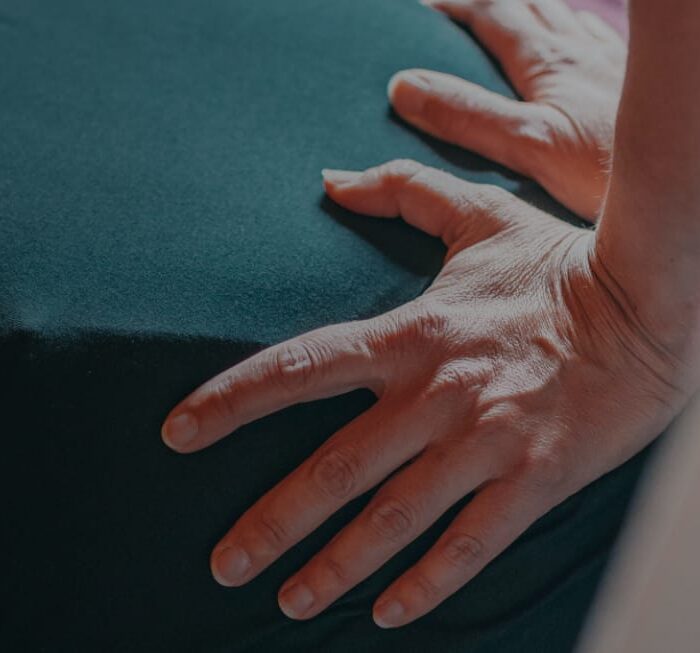
Where a wrist hurts narrows the possibilities faster than almost anything else, which is why a clinician’s first question is usually “point to it with one finger.”
This is a map of that. It will not give you a diagnosis, and it is not trying to. What it will do is turn “my wrist hurts” into something specific enough to act on, and tell you which findings mean you should stop reading and get it examined.
Wrist pain by location
| Where it hurts | Common causes | What tends to give it away |
|---|---|---|
| Thumb side of the wrist | De Quervain’s tenosynovitis, thumb CMC arthritis, scaphoid injury | Pain gripping and lifting. A bony bump and grinding points to the joint. Pain after a fall points to the scaphoid |
| Little-finger side | TFCC injury, ulnar impaction, ECU tendon problems, the forearm joint | Worse with gripping plus twisting. Clicking suggests a tendon or an unstable joint |
| Back of the wrist | Ganglion cyst, joint irritation, extensor tendon problems | A visible lump that changes size suggests a ganglion. Pain loading into extension, as in a push-up |
| Palm side, into the fingers | Carpal tunnel syndrome, flexor tendon irritation | Numbness and tingling in thumb, index, middle and half the ring finger. Worse at night |
| Palm side, little-finger edge | Ulnar nerve at the wrist, in Guyon’s canal | Numbness in the little and ring fingers, weak pinch. Often from pressure through the palm |
| All over, both wrists | Inflammatory arthritis, systemic causes, hypermobility | Both sides, morning stiffness, or other joints involved too |
| Wrist plus forearm and up the arm | A nerve compressed higher, or a referred source in the neck | Symptoms change with neck or shoulder position rather than wrist position |
Numbness and pain are not the same clue
This is the distinction that does the most work, and the one most often collapsed.
Numbness, tingling or a burning sensation is a nerve symptom. It follows the territory the nerve supplies, which is why the pattern of affected fingers is so informative. The median nerve supplies the thumb, index, middle and the thumb side of the ring finger, per AAOS OrthoInfo. The ulnar nerve covers the little finger and the outside of the ring finger. If your symptoms respect one of those maps, that is a strong clue.
Pain at a specific tender spot, especially reproduced by a particular movement or load, is more likely a joint, a tendon or a ligament. It tends to stay put rather than radiating along a line.
You can have both, and plenty of people do. AAOS notes that many people with thumb base arthritis also have carpal tunnel syndrome, so a thumb that aches and fingers that go numb are probably two things.
What the timing tells you
- Sudden onset with an injury. A fall onto an outstretched hand deserves assessment rather than watching. Thumb-side pain after a fall in particular, because the scaphoid is a bone that does badly when a fracture is missed early.
- Sudden onset with no injury. Common, and usually a tendon or joint that has been quietly accumulating load. Also worth checking for a change in activity two to three weeks earlier rather than yesterday.
- Gradual, worse over months. Fits arthritis and nerve compression, both of which AAOS describes as typically developing gradually.
- Worst at night or on waking. Nerve compression, classically carpal tunnel, because most people sleep with the wrist bent. Also trigger finger, where stiffness builds during inactivity.
- Worst first thing, easing through the day. Points toward stiffness and tendon problems rather than nerve compression.
HAND THERAPY IN PENFIELD
Narrowed it down and want it confirmed properly?
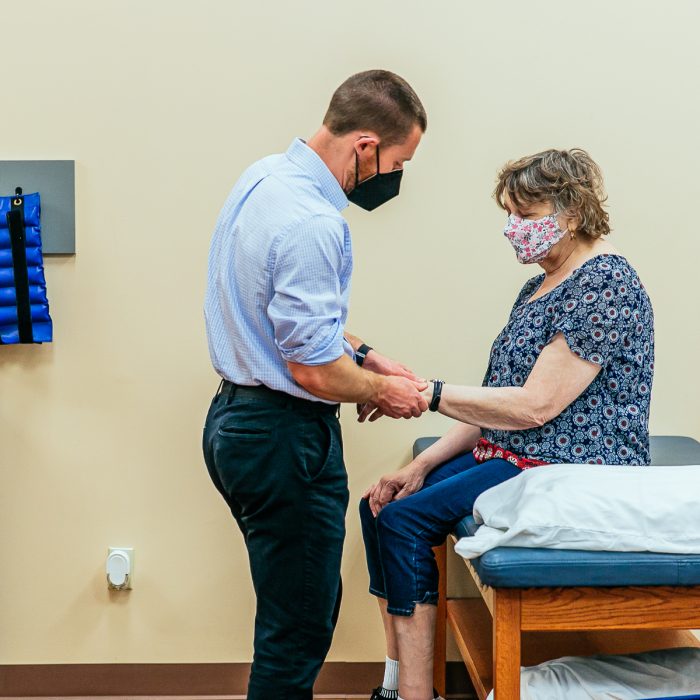
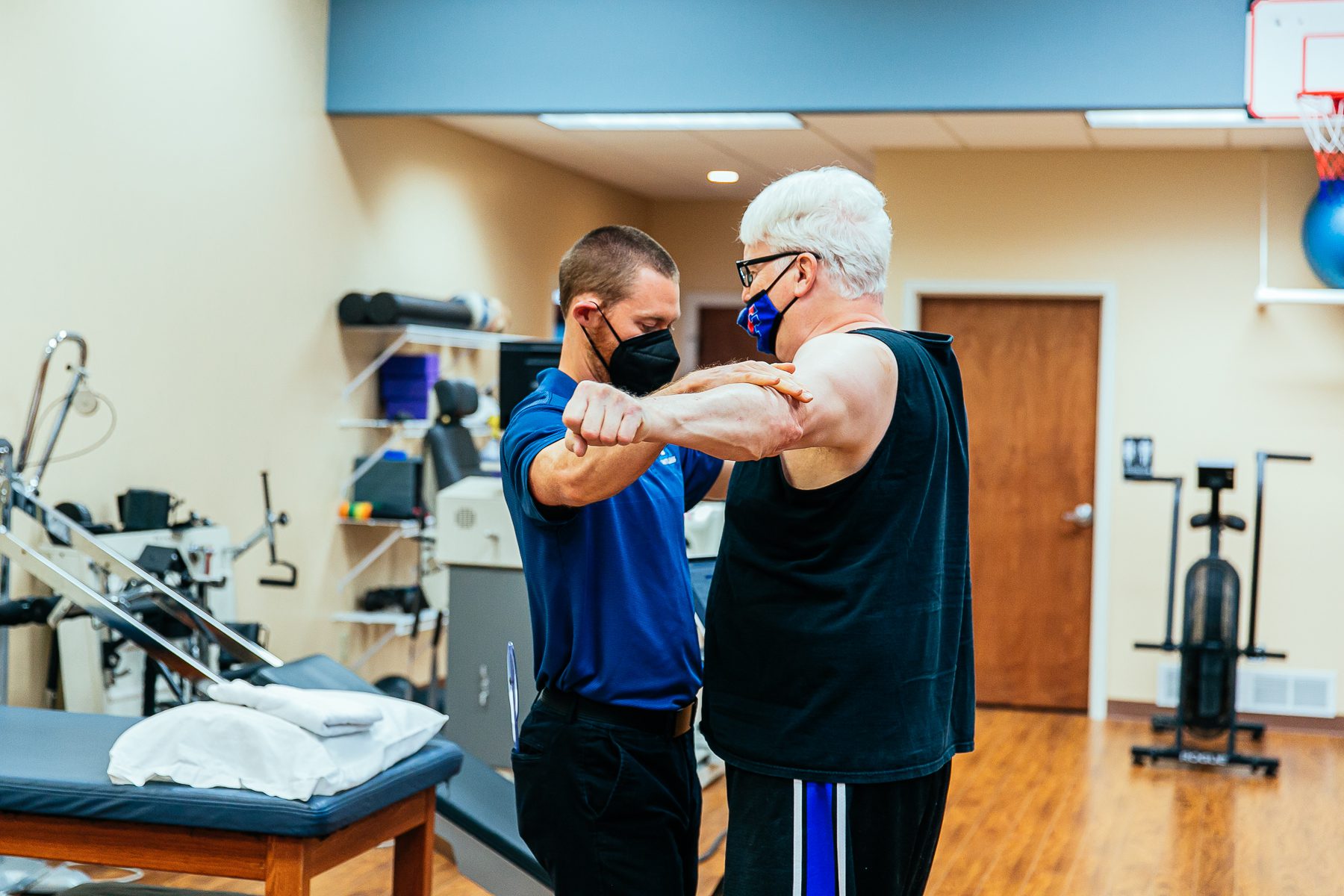
Bring us the one-finger answer and we will do the rest. Our Penfield hand therapy team assesses the whole upper limb, and will tell you plainly if imaging or a surgical opinion should come first.
Findings that mean get it looked at
Not to alarm you. These are simply the situations where self-management is not the efficient route.
- Pain that started with a fall onto the hand, particularly on the thumb side
- Obvious deformity, or a wrist you cannot move
- Numbness that has become constant rather than coming and going
- Visible loss of muscle bulk, especially at the base of the thumb
- A finger locked bent that you cannot straighten
- Colour change in the fingers alongside numbness
- Both wrists, with morning stiffness and other joints involved
- Swelling that is hot, or came on suddenly with no explanation
Getting any of these assessed early keeps more of the simple options available, which is the whole reason to do it.
Why the assessment should not stop at the wrist
Hand therapy’s certified scope covers the hand, wrist, elbow and shoulder girdle, and that is not administrative trivia. The median nerve begins as nerve roots in the neck and travels the length of the arm before it reaches the wrist. The ulnar nerve does the same, passing through a narrow tunnel at the elbow on its way. AAOS explicitly notes that electrodiagnostic testing is used partly to establish whether a nerve is compressed in more than one place.
So a wrist assessment that only examines the wrist can be right, and can also miss the actual driver. If you have already been treated for a wrist problem and got partial relief that stalled, that is the pattern worth revisiting. Our piece on conditions often misdiagnosed as carpal tunnel goes into it properly.
Where to get a wrist assessed in the Rochester area
Our hand therapy team runs from the Penfield clinic at 961 Panorama Trail South, and the clinic is listed in the American Society of Hand Therapists Find-a-Therapist directory, which you can check independently. Where the problem turns out to sit above the wrist, the plan runs with our orthopedic physical therapy, and after any hand or wrist surgery it runs alongside the surgeon’s protocol as post-surgical rehabilitation.
Across fifteen years and more than 5,000 patients and athletes treated, the single thing that most improves a first appointment is a patient who can say where it hurts, what makes it worse, and when it started. If this article got you those three answers, it did its job. Request an appointment and bring them.
Frequently Asked Questions
What does pain on the thumb side of the wrist mean?
Most commonly de Quervain’s tenosynovitis or arthritis at the base of the thumb. A bony bump with a grinding sensation on movement points to the joint, while pain that is purely about gripping and lifting, without the bump, fits the tendon. If it started with a fall onto the hand, the scaphoid bone needs excluding, and that one is worth not delaying.
Why does my wrist hurt with no injury?
Very common, and usually accumulated load rather than a single event. Look at what changed two or three weeks before the pain started rather than the day it appeared.
Should I use a wrist brace for wrist pain?
It depends what you have, which is exactly why the location matters. For carpal tunnel symptoms a night splint that holds the wrist straight is a first-line measure and one of the highest-value things you can do. For thumb base arthritis, a splint supporting the base of the thumb is a different device doing a different job. For a tendon problem, short-term support during aggravating tasks can help while you change the load. What is not useful is all-day immobilisation of a wrist that has no clear diagnosis, because the hand still needs to move and you may simply be delaying finding out what is wrong.
Can wrist pain come from the neck?
Yes. Both major nerves to the hand originate in the neck, so a problem there can produce symptoms at the wrist and hand. The giveaway is that symptoms change with neck or shoulder position rather than wrist position.
How do I know if it is serious?
The features worth acting on rather than waiting out are: it began with a fall, there is deformity or you cannot move the wrist, numbness has become constant, there is visible muscle wasting, a finger is locked, the fingers change colour, or both wrists are involved with morning stiffness. None of these are emergencies in most cases, and none of them mean the outcome will be bad. They simply mean an examination will get you somewhere faster than more reading will, and that acting earlier tends to leave more of the simple treatment options on the table.
READY TO LIVE A LIFE WITHOUT LIMITS?
About the Author
This article was written by Dr. Dan Bajus, PT, DPT, OCS, founder and owner of Limitless Physical Therapy Specialists. Dr. Bajus is a board-certified Orthopaedic Clinical Specialist (OCS) and holds AIB-VR/CON certification in vestibular rehabilitation. He has more than 15 years of clinical experience and has treated over 5,000 patients and athletes across the practice’s five Rochester-area and Central New York clinics. Learn more about Dr. Bajus and the Limitless team here.