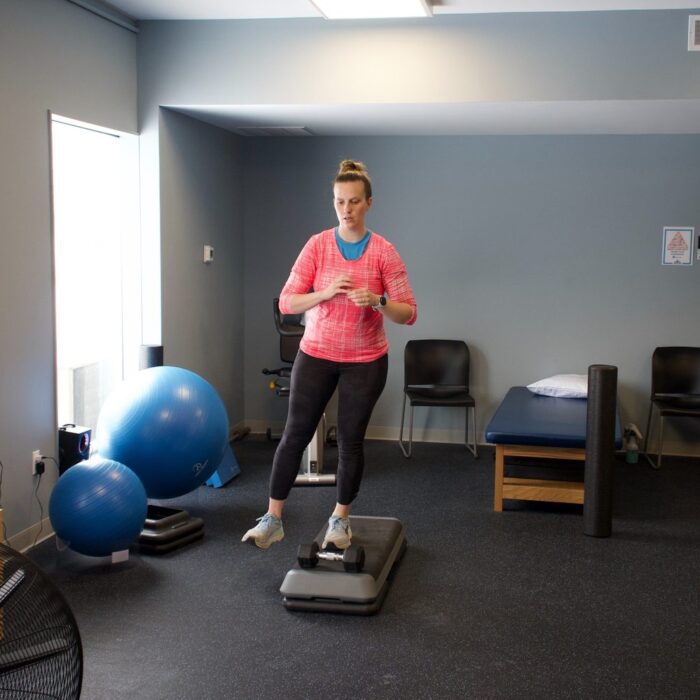
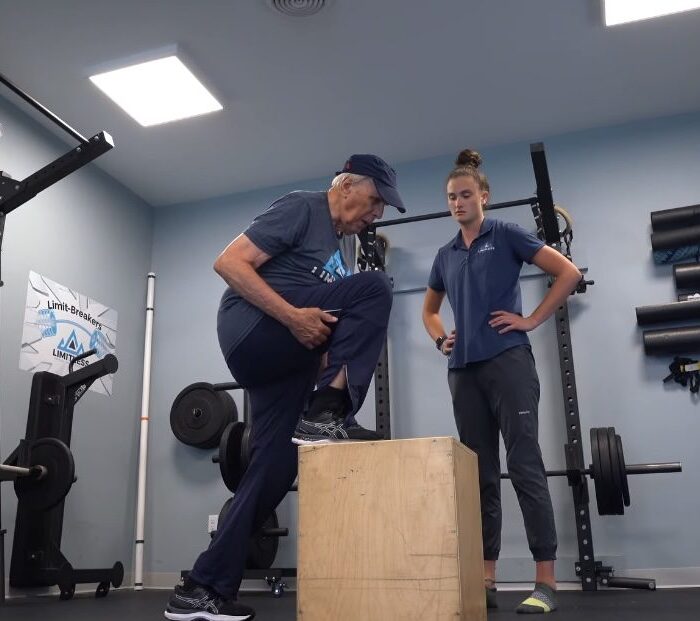
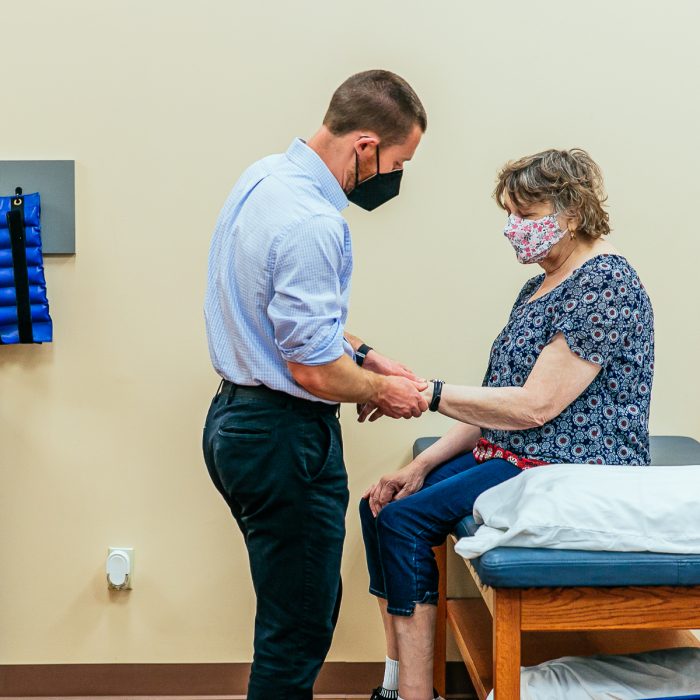
The American Heart Association’s stroke rehabilitation guideline contains a sentence worth reading twice: “The end of formal rehabilitation (commonly by 3 to 4 months after stroke) should not mean the end of the restorative process.” Johns Hopkins puts it more plainly still. In its stroke recovery guidance, updated July 2026, rehabilitation specialist Dr. Preeti Raghavan states there is no expiration date on recovery, and that it can continue as long as barriers are being addressed and there are opportunities for learning.
Hold that against what most people are actually told, which is some version of “you have plateaued.” That is a discharge decision. It is not a biological deadline.
If you or someone you care about is looking for neurological physical therapy in the Rochester area, here is what it covers, who it helps, and how to tell a real neuro programme from a general clinic that will take the referral.
What is neurological physical therapy?
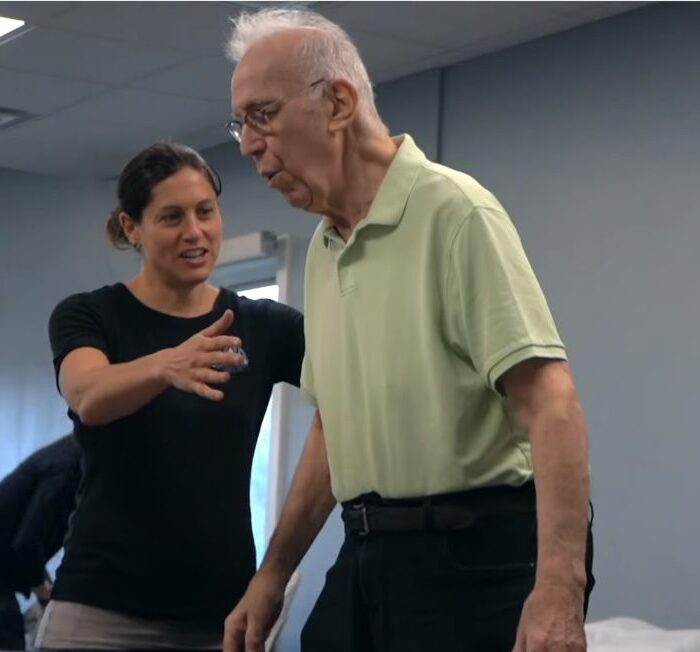
Neurological physical therapy is rehabilitation for movement problems caused by a condition affecting the brain, spinal cord or nerves, rather than by an injury to the joint or muscle itself.
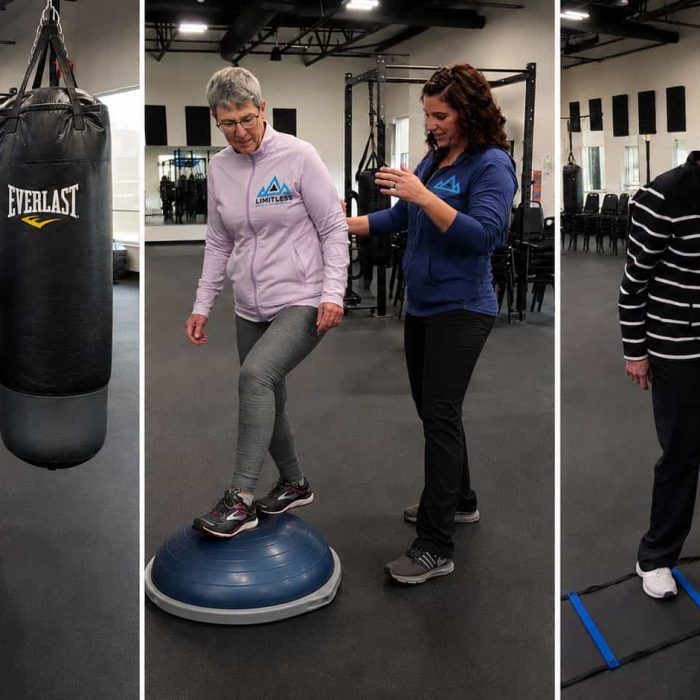
The distinction matters because the target is different. In orthopedic rehab you are usually rebuilding tissue capacity. In neuro rehab you are retraining a signal. The muscle may be perfectly capable; the problem is the message reaching it, the timing, or the brain’s map of where the limb is. That is why neuro programmes lean on repetition, intensity and task specificity rather than on sets and reps alone.
The conditions it commonly covers:
- Parkinson’s disease and atypical parkinsonism
- Recovery after a stroke
- Multiple sclerosis
- Vestibular disorders, including BPPV and persistent dizziness
- Concussion and post-concussion symptoms
- Balance loss and fall risk with a neurological cause
The plateau is a curve, not a wall
This is the point we would most like people to take away, and it is the one most at odds with how neuro rehab gets talked about.
Recovery curves really do flatten. Johns Hopkins describes the first three months after a stroke as the critical period, when rehabilitation and the brain’s natural recovery work together, and notes that progress slows after six months as that window closes. All true, and worth planning around. What follows from it is where the common reading goes wrong.
Slower is not the same as finished. Mayo Clinic notes that performance can improve even 12 to 18 months after a stroke. The AHA guideline explicitly separates the end of a course of formal rehabilitation from the end of the restorative process. And in Parkinson’s, where the underlying condition is progressive rather than recovering, the goal shifts from restoring function to protecting it, which is work that never stops being worth doing.
So when someone is told they have plateaued, the useful question is not “is that true” but “plateaued at what, doing what, measured how.” A person can be discharged from an inpatient programme because they no longer need that level of care and still have a great deal of movement left to reclaim on an outpatient plan.
What a real neuro programme looks like
Three things separate a genuine neurological programme from a clinic that will happily accept the referral.
Certified, condition-specific protocols. LSVT BIG is the clearest example. It trains people with Parkinson’s to increase the size, or amplitude, of their movements from head to toe, and it has a fixed structure: one-hour sessions, four times a week, for four consecutive weeks, with daily homework. It can only be delivered by an LSVT BIG Certified Clinician. In a randomised controlled trial (Ebersbach and colleagues, 2010), LSVT BIG produced improvements on the Unified Parkinson’s Disease Rating Scale and other motor measures, while Nordic walking and home exercises in the same study did not. LSVT Global reports that documented improvements lasted four months with no further treatment.
Intensity that is actually prescribed. Neuroplasticity responds to dose. A programme that has you doing gentle range of motion twice a week is not the same intervention as one that pushes into difficulty with a clear progression.
An honest line between therapy and a class. LSVT Global is direct about this: community exercise groups are valuable for fitness, encouragement and friendship, but they “do not take the place of receiving individualized physical or occupational therapy.” Both have a role. They are not substitutes.
Which programme fits which condition
Here is how we route people, so you can see whether what you are being offered matches your situation.
| Your situation | What the plan centres on | Where it runs |
|---|---|---|
| Parkinson’s disease, movements getting smaller or slower | Amplitude training (LSVT BIG), gait, freezing, posture | Parkinson’s programme, with LSVT BIG certified clinicians |
| After a stroke, weakness or control loss on one side | Gait, task retraining, tone management, endurance | Post-stroke recovery |
| Dizziness, vertigo, the room spinning | Vestibular rehabilitation, repositioning manoeuvres, gaze stability | Our Greece clinic, the balance and vestibular site |
| Unsteady, or worried about falling | Fall-risk assessment, strength, gait, confidence on stairs and uneven ground | Balance and fall preparedness |
| After a concussion, symptoms that will not settle | Graded return to activity, vestibular and ocular work | Concussion care |
| Finished a course of therapy, want to keep the gains | Group programming, alongside periodic tune-up sessions | Parkinson’s and neurological wellness classes |
Note the last row, because it is the one people skip. Maintaining what you worked for is a legitimate part of the plan, not an optional extra.
NEURO-REHAB IN PENFIELD
Been told you have plateaued? Get a second opinion on that.
Our neuro-rehab programme runs from the Penfield clinic on Panorama Trail South, with LSVT BIG certified clinicians across the practice. Tell us what you cannot do yet, and we will tell you honestly what we think is still available.
When should you start?
Sooner than most people do, and earlier than feels necessary.
For Parkinson’s this is explicit in the programme guidance. LSVT Global notes that by the time a diagnosis is made, significant changes in the brain have already happened, and that starting before you notice problems with posture, balance or movement size may help you head those problems off. Their summary of the timing question is worth borrowing: it may work best in early and middle stages, and it is never too late to start.
After a stroke, earlier is better established still. Johns Hopkins begins rehabilitation around 24 hours after the cause of the stroke has been treated.
Finding neurological physical therapy near you
Rochester has real neuro capacity, so you can afford to be selective. Four things to ask:
- Is anyone here certified in the protocol I need? For Parkinson’s, ask specifically about LSVT BIG. It is a named certification, not a description.
- How often, and for how long? Dose is part of the intervention. A vague answer is an answer.
- What happens when this course ends? Tune-ups and group programming should already be part of the plan.
- Will you coordinate with my neurologist? Neuro care is a team sport.
At Limitless, neuro-rehab runs from our Penfield clinic at 961 Panorama Trail South, which joined the practice through the acquisition of Wellness 360 Physical Therapy and Massage, reported by the Rochester Business Journal in May 2026. We have LSVT BIG certified clinicians in the practice, including Dr. Becky Cavellier at Brighton and Dr. Gwen Haffenden at Greece, so the certification is not concentrated in one building. Our Parkinson’s and neurological wellness classes use PWR! Moves programming alongside balance, gait and strength work, for people who want to keep going after a course of therapy ends.
Across fifteen years and more than 5,000 patients and athletes treated, the sentence we hear most from neuro patients is that someone told them this was as good as it gets. Sometimes that is true. Often it is a statement about one programme, at one intensity, at one point in time. You do not have to accept it as the final word without a second look. If it is easier to talk it through first, request an appointment and tell us what changed and when.
Frequently Asked Questions
What is the difference between neurological and orthopedic physical therapy?
Orthopedic physical therapy treats problems in the joints, muscles and tendons themselves, so the work is mostly about restoring tissue capacity and mechanics. Neurological physical therapy treats movement problems caused by the brain, spinal cord or nerves, so the work is about retraining signals, timing and control. The exercises can look similar from the outside. The reasoning behind them, the intensity, and the way progress gets measured are different. Many people need both at once, for example someone recovering from a stroke who also has a stiff shoulder.
Does insurance cover neurological physical therapy?
Generally yes, in the same way as any physical therapy, though visit limits and referral requirements vary by plan. Our billing team verifies your benefits before the first appointment.
Is it too late to start if my stroke was years ago?
Not necessarily, and this is the question worth pushing on. Johns Hopkins is explicit that there is no expiration date on stroke recovery, and that it can continue as long as barriers are being addressed and there are opportunities for learning. Mayo Clinic notes improvements even 12 to 18 months out. The honest caveat is that gains in the chronic phase usually come slower and more narrowly than in the first three months, and they tend to follow a specific goal rather than general therapy. If there is a particular task you want back, that is a much better starting point than “I want to be better.”
What is LSVT BIG?
A certified physical therapy protocol for Parkinson’s that trains larger movements. It runs one hour, four times a week, for four weeks, with daily homework, and only certified clinicians can deliver it.
Can physical therapy help multiple sclerosis?
Yes, for the movement, balance and fatigue-management side. LSVT Global also reports clinical experience suggesting BIG-style training can help movement problems from conditions including MS and stroke, though the published research has focused on Parkinson’s. Plans for MS need to respect fatigue and heat sensitivity, which changes how sessions are paced.
READY TO LIVE A LIFE WITHOUT LIMITS?
About the Author
This article was written by Dr. Becky Cavellier, PT, DPT, a physical therapist at Limitless Physical Therapy Specialists. Dr. Cavellier earned her Doctor of Physical Therapy from the University of Vermont in 2010 and holds a bachelor’s degree in chemistry and biology from Hobart and William Smith Colleges. She is certified in vestibular and concussion rehabilitation therapy through the American Institute of Balance (AIB VRT II) and is certified in LSVT BIG for Parkinson’s disease. She brings ten years of experience working with geriatric patients and focuses her practice on vestibular and neurological physical therapy. Learn more about Dr. Cavellier and the Limitless team here.