Here is something that should change how you read massage websites: New York does not license "medical massage." There is no such credential. Under Education Law Article 155, the licence is Licensed Massage Therapist, and any use of the title "massage therapist" in this state requires it. That is the whole legal picture.
Which means the phrase "medical massage" tells you nothing on its own. Anyone can print it. What actually separates clinical work from a spa hour is not a word on a menu, and once you know what to look for it is easy to tell the difference in about two questions.
What is medical massage?
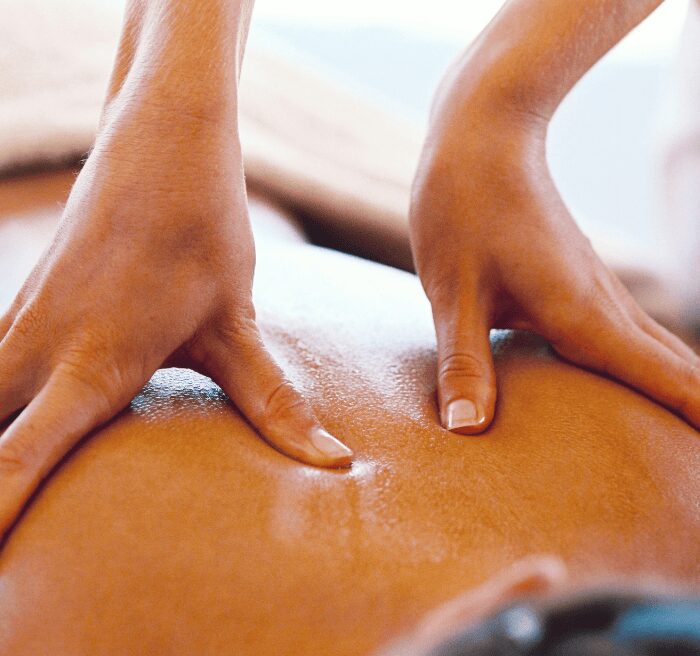
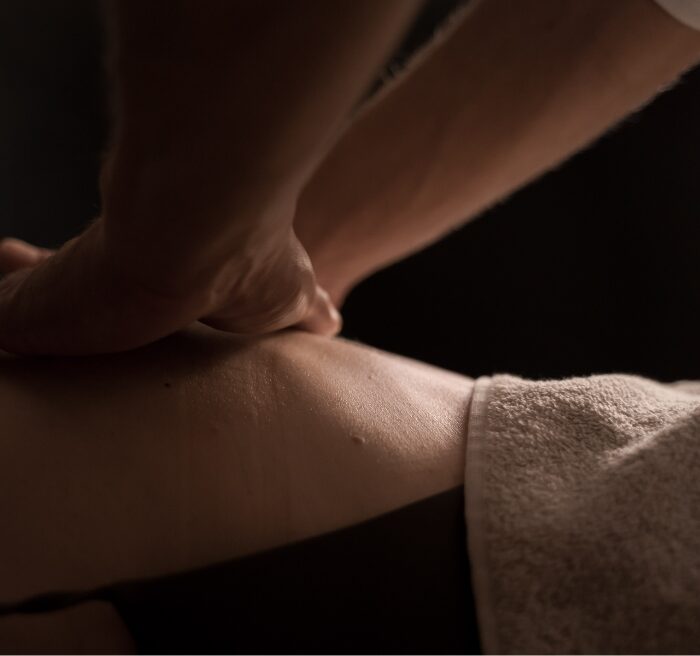
Medical massage is massage delivered from an assessment and a plan of care, aimed at a specific physical problem, usually alongside or inside a course of rehabilitation.
The technique may be identical to what you would get in a spa. Deep tissue is deep tissue. The difference is everything around it: someone worked out why the tissue is behaving that way, chose the technique for that reason, and will change the approach based on how you respond over several sessions. It is the difference between a treatment and a service.
What that looks like in practice:
- An intake that asks what you cannot do, not just where it hurts
- A technique choice with a stated reason behind it
- Notes, so session four builds on session one
- Coordination with your physical therapy plan if you have one
- An endpoint, rather than an open-ended standing appointment
The credential that actually exists in New York
Since "medical massage" is not a licence, it is worth knowing what the real one requires, because it is more demanding than most people assume.
To be licensed as a massage therapist in New York State, per the New York State Education Department Office of the Professions, a person must complete a registered programme of not less than 1,000 hours of classroom instruction. That coursework has to include anatomy, physiology, neurology, myology or kinesiology, pathology, hygiene, first aid, infection control, and both eastern and western massage theory and technique. Within those 1,000 hours, at least 150 must be hands-on practice on a person. They then have to pass the New York State Massage Therapy Examination, which is offered twice a year, and hold a current CPR certification.
State law also defines the scope narrowly. Education Law Section 7801 describes massage therapy as applying a scientific system of activity to the muscular structure of the body, by stroking, kneading, tapping and vibrating, for the purpose of improving muscle tone and circulation.
Read that definition carefully, because it is a useful filter. Muscle tone and circulation. Not detoxification, not weight loss, not curing disease. A licensed therapist working inside their scope will not promise those things, and one who does is telling you something.
Spa massage and clinical massage, side by side
Neither column is better. They are different products, and the mistake is paying for one while needing the other.
| Spa or relaxation massage | Clinical or medical massage | |
|---|---|---|
| Goal | Feel better today | Change a specific problem over time |
| Starts with | Your preference for pressure | An assessment of what is limiting you |
| Technique chosen by | What you booked | What the findings suggest |
| Session to session | Repeats | Progresses, based on notes |
| Relationship to rehab | Separate | Coordinated with your plan of care |
| Ends when | You stop booking | The goal is met, or it is honestly not working |
The last row is the one worth holding a clinic to. A clinical approach should be willing to tell you it is not the right tool.
Two questions that tell you which one you are getting
Skip the website copy and ask these.
- "What will you assess before you start?" A clinical answer names things: range of motion, what movements reproduce the symptom, how it behaves through the day, what you have already tried. A spa answer talks about pressure preference and which oil.
- "How will we know in three sessions whether this is working?" There should be an answer, and it should be about function rather than about how relaxed you felt afterwards.
If both answers land well, the label on the menu genuinely does not matter.
MASSAGE THERAPY AT LIMITLESS
Want massage that works alongside your recovery, not separately from it?
Our massage therapy runs from the Penfield clinic and sits inside the same plan of care as your physical therapy. Tell us what you are working around, and we will tell you honestly whether massage is the right part of the answer.
When massage is the right tool, and when it is not
Being straight about this is more useful than selling it.
Massage tends to earn its place for muscular tension that keeps returning, for tissue that is guarding around an old injury, for scar tissue and mobility after surgery, for recovery load in athletes and heavy manual work, and as a way to make a joint or region tolerate the strengthening work it actually needs.
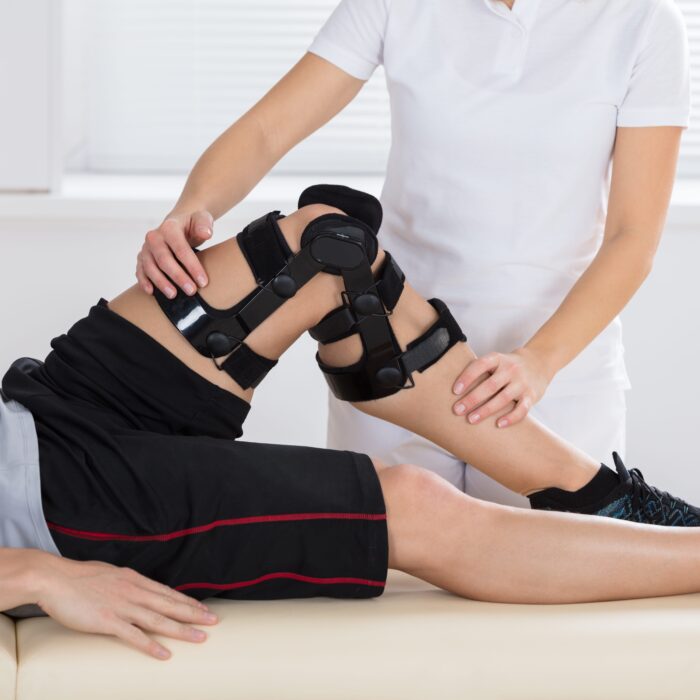
Massage alone tends to disappoint when the driver is a capacity problem. If a shoulder hurts because it cannot handle what you are asking of it, hands-on work will buy relief that keeps expiring, because nothing has changed about the demand. That is a strengthening problem wearing a tension costume. The honest move there is to use massage to make the strengthening tolerable, and to put the strengthening at the centre of the plan. Our orthopedic physical therapy and massage work run together for exactly this reason.
It also has a real role in the upper limb, where tension in the forearm and hand is often referred from further up the chain. Our hand therapy team assesses the whole limb from the shoulder girdle down for that reason.
Massage therapy at our Rochester-area clinic
Massage runs from our Penfield clinic at 961 Panorama Trail South, which joined the practice through the acquisition of Wellness 360 Physical Therapy and Massage, reported by the Rochester Business Journal in May 2026.
The massage therapy menu covers myofascial release, deep tissue, sports massage, orthopedic massage, Swedish massage and manual lymph drainage, plus a 15-minute chair massage that works as an add-on to a physical therapy session or after a group class. Therapeutic massage runs 30 or 60 minutes, and you do not need to know which type you want before you arrive. Working that out is part of the first session.
The part we would point to is not the menu, though. It is that the massage therapists and the physical therapists are in the same building, on the same plan, with the same notes. Beth Parry holds dual qualifications as a physical therapist assistant and a licensed massage therapist, which is the clearest version of the point this whole article is making: the value is in the clinical reasoning behind the hands, not in what the service is called.
Across fifteen years and more than 5,000 patients and athletes treated, the pattern we see with massage is that it works best as part of something rather than as the whole thing. If you would like someone to tell you honestly where it fits for you, request an appointment and describe what keeps coming back.
Frequently Asked Questions
Is medical massage covered by insurance?
Usually not as massage. Coverage in New York generally applies to physical therapy rather than to massage therapy, even when a licensed massage therapist delivers care inside a clinic. Some plans, and some auto or workers' compensation claims, treat it differently. The practical answer is to have it verified rather than assumed, which our billing team does before a first appointment. Our self-pay massage pricing is published on the massage therapy page so you can see the cost either way.
What is the difference between a massage therapist and a physical therapist?
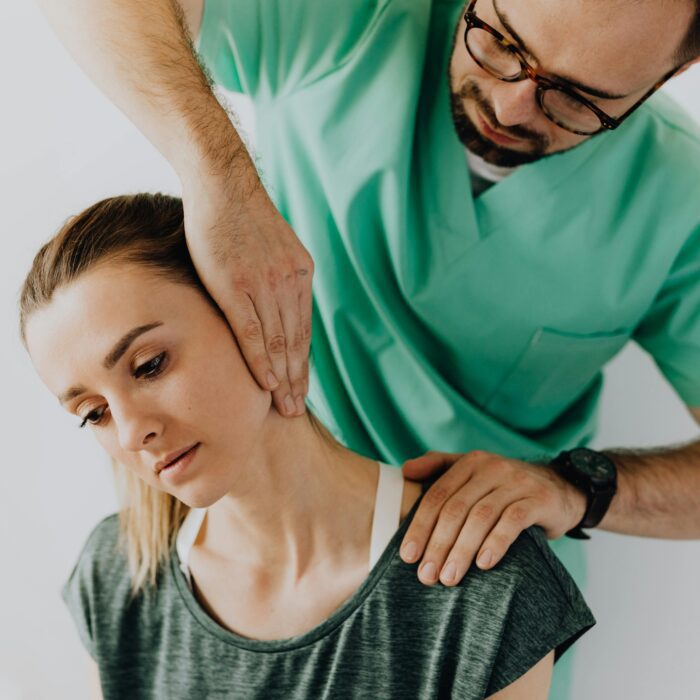
Different licences, different scope. Massage therapy in New York is defined around the muscular structure, muscle tone and circulation. Physical therapy covers assessment, diagnosis of movement problems, exercise prescription and a broader set of interventions.
Do I need a referral for massage therapy?
No. Massage at our clinic can be booked directly, unlike physical therapy where New York requires a referral within 30 days of your first visit to continue care.
How often should I get a clinical massage?
It depends on what you are treating, and a clinic that answers this without assessing you first is guessing. For an acute flare, a tighter cluster of sessions over two or three weeks often makes sense, then spacing out. For recovery support around heavy training or physical work, something regular and lower frequency tends to work better. What should not happen is an open-ended weekly booking with no review point. Ask when you will reassess whether it is still doing anything, and hold the clinic to that date.
Does deep tissue massage need to hurt to work?
No. Pressure and effectiveness are not the same variable, and tissue that is already guarding often responds worse to more force. Tell your therapist what you are feeling; the plan should adjust.
READY TO LIVE A LIFE WITHOUT LIMITS?
About the Author
This article was written by Beth Parry, PTA, LMT, at Limitless Physical Therapy Specialists in Penfield. Beth brings more than 20 years of experience in health and wellness and holds dual qualifications as a physical therapist assistant and a licensed massage therapist. She specialises in myofascial release, sacroiliac joint dysfunction, chronic pain management, migraines and scar tissue treatment, and holds certifications including LSVT BIG, Rock Steady Boxing, Parkinson's Cycle, Pilates through AAAI/ISMA, and Yoga for Seniors. She also founded a monthly caregiver support programme providing education and connection for local caregivers. Learn more about Beth and the Limitless team here.