Last updated: May 2026
Frozen Shoulder Physical Therapy by Phase: What Actually Works
Frozen shoulder is one of the few orthopedic conditions where doing the wrong exercise at the wrong time can make recovery take six months longer. The right physical therapy approach matches what your shoulder is actually doing right now (inflamed and painful, stiff and frozen, or thawing and tight) rather than treating frozen shoulder as one condition with one protocol. The article below walks through the phases, what PT actually does in each one, and why the aggressive-stretching advice you’ve probably been given can backfire.
This guide draws on the Journal of Orthopaedic & Sports Physical Therapy 2013 Clinical Practice Guidelines for Adhesive Capsulitis, which remain the most-cited PT framework for the condition, plus what we see clinically across our Limitless PT clinics in Victor, Brighton, Greece, and Cortland.
What Frozen Shoulder Actually Is
Frozen shoulder is properly called adhesive capsulitis. The shoulder joint is wrapped in a fibrous capsule that, in this condition, becomes inflamed and progressively thickens and contracts. The result is the signature pattern: pain that comes on without an obvious injury, then progressive loss of motion in every direction, with external rotation typically the most limited. Reaching behind your back, behind your head, or out to the side becomes increasingly difficult, then impossible.
Adhesive capsulitis affects 2% to 5% of the general population. The rate is significantly higher in people with diabetes (10 to 20%) and thyroid disease, and the condition is roughly four times more common in women than men. Peak onset is age 40 to 60. About 70% of cases are primary (no clear trigger), and the rest are secondary, often following minor shoulder trauma, surgery, or a period of immobilization.
The single feature that distinguishes adhesive capsulitis from other shoulder conditions is loss of passive range of motion. With a rotator cuff tear, you can usually still move the shoulder passively (someone else moves it for you). With frozen shoulder, the capsule itself is the limit. Even a skilled clinician can’t move the joint past its restricted range without pain.
The Three Phases (and Why They Matter for Treatment)
The condition follows a recognized progression. Knowing which phase you’re in changes which physical therapy approach helps and which one prolongs the problem.
Phase 1: Painful (Freezing), months 0 to 6 typically. The shoulder hurts more than it’s stiff. Pain is often worst at night, can wake you up rolling onto the affected side, and may radiate down the upper arm. Range of motion is starting to decrease but the dominant complaint is pain. This is the high-irritability phase in clinical guidelines. Morning stiffness that fades within an hour of moving is usually positional rather than frozen shoulder, and our guide shows how to get rid of shoulder pain after waking up.
Phase 2: Stiff (Frozen), months 4 to 12 typically. Pain begins to ease but stiffness becomes the dominant problem. Reaching overhead, behind your back, and across your body all become significantly limited. Daily tasks (washing hair, putting on a seatbelt, reaching for a wallet) become difficult. Pain shifts from constant to end-range only. This is the moderate-irritability phase.
Phase 3: Thawing (Recovery), months 12 to 24+ typically. Range of motion gradually returns, often with some persistent end-range tightness. Strength returns once motion does. This is the low-irritability phase.
These timelines vary widely. The JOSPT framework’s irritability classification (high, moderate, low) maps better to treatment decisions than the calendar phases, because two patients can be in calendar month 6 with very different irritability levels and very different appropriate treatments.
Most frozen shoulder patients arrive in the late painful phase or early stiff phase, typically 3 to 6 months after symptom onset. The textbook profile holds in clinical practice: female patients between 45 and 60 years old account for the largest share, often with a history of diabetes mellitus or thyroid disorder. Many describe being told earlier in their course “it’s just a tight shoulder, stretch it out,” and have been doing aggressive stretches for weeks that made everything worse before being properly diagnosed. Earlier accurate diagnosis is consistently the variable that predicts shorter total recovery.
Phase-Matched Physical Therapy: What Each Phase Actually Looks Like
This is where most generic frozen shoulder content falls short. A high-irritability phase 1 patient and a low-irritability phase 3 patient need almost opposite treatments. Pushing too hard in phase 1 inflames the capsule further. Going too gentle in phase 3 leaves residual stiffness on the table.
High-Irritability Phase (corresponds to phase 1, painful)
What PT focuses on: Pain reduction, sleep restoration, gentle pain-free motion only.
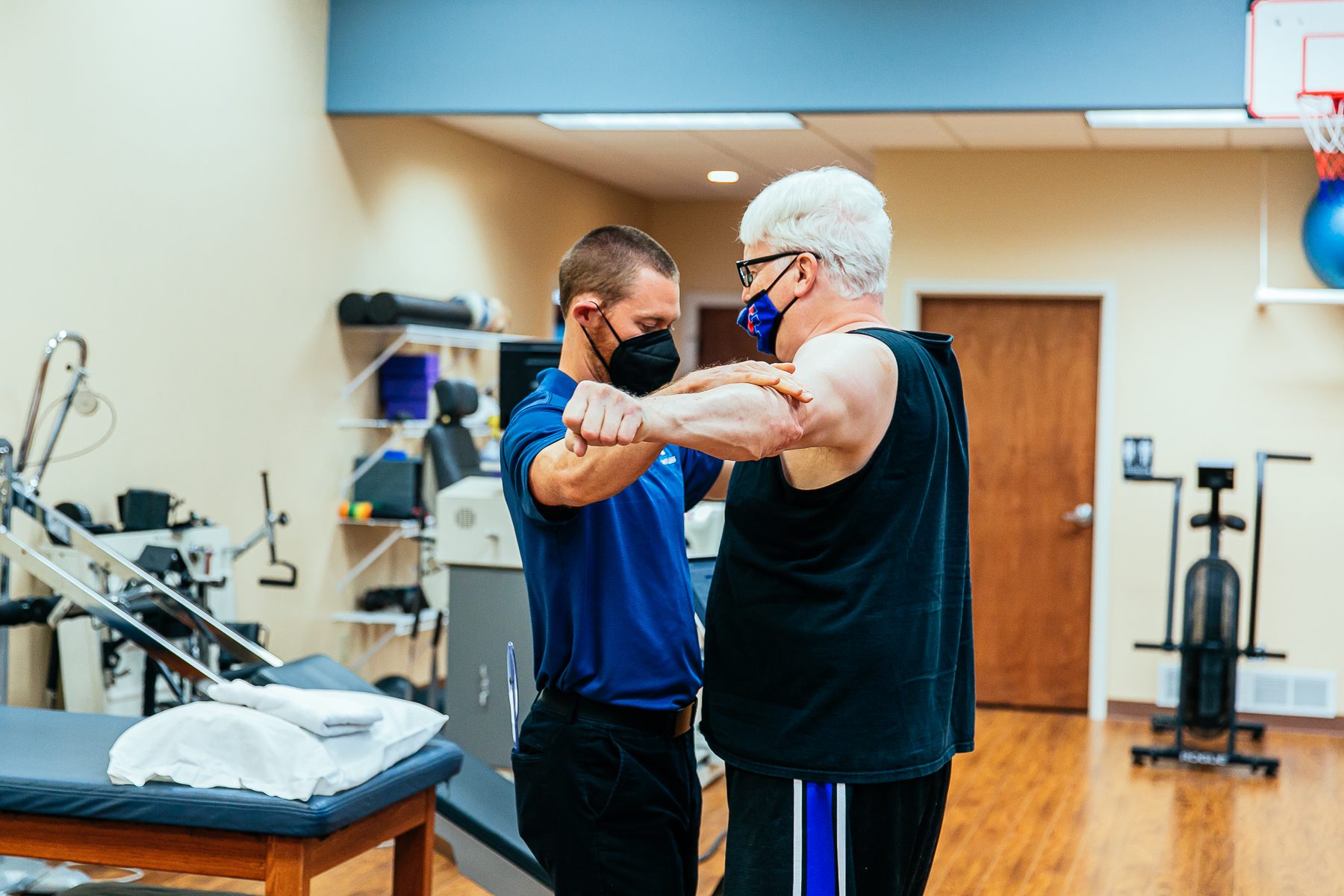
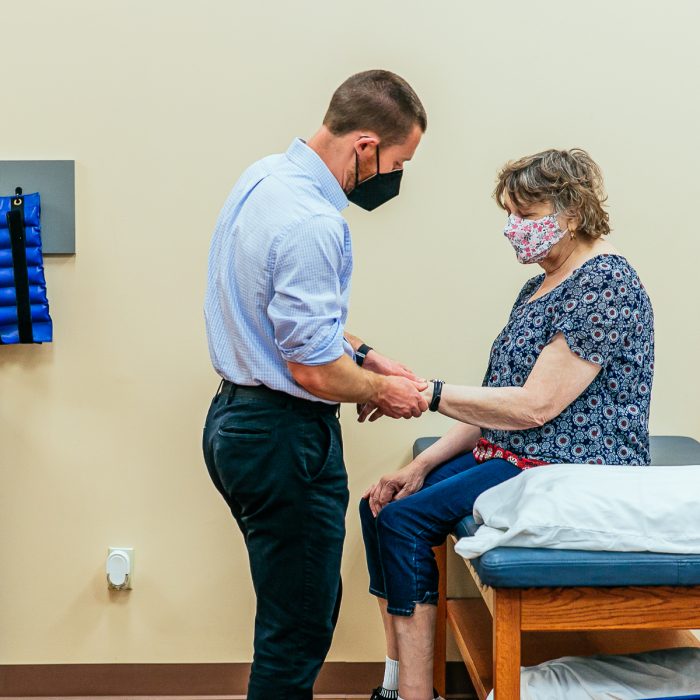
What you’ll do in clinic: Modalities (heat, ultrasound, sometimes electrical stimulation), low-grade joint mobilizations (grades I and II in PT terminology, designed to inhibit pain rather than stretch tissue), and education about positioning. Active-assisted range of motion within pain-free range only, often using a cane or pulley.
What you won’t do: End-range stretching. Aggressive stretching during the inflammatory phase increases capsular inflammation and can extend phase 1 by months. This is the most common avoidable error.
Home program: Pendulum exercises, gentle pain-free range work, ice or heat for symptom management, sleep position adjustments. Most patients see meaningful pain reduction within 4 to 6 visits.
Moderate-Irritability Phase (corresponds to phase 2, stiff)
What PT focuses on: Capsule mobilization to restore range of motion, particularly external rotation.
What you’ll do in clinic: Higher-grade joint mobilizations (grades III and IV) to selectively stretch tightened capsule structures. Manual stretching by the therapist into ranges you can’t access actively. Progressive home stretching protocols held for longer durations (30 seconds to 1 minute, multiple repetitions). Some clinics use techniques like sustained low-load stretching or contract-relax patterns.
What you’ll do at home: A structured stretching program targeting external rotation, abduction, and behind-the-back reach. Towel stretches, doorway stretches, and posterior capsule stretches. Frequency is typically 2 to 3 sessions per day, 5 to 10 minutes each.
Expected pace: Visible range of motion gains week over week. Most patients regain functional motion (enough for daily tasks) within 8 to 12 weeks of consistent phase-matched PT.
Low-Irritability Phase (corresponds to phase 3, thawing)
What PT focuses on: End-range mobility, strengthening, return to full activity.
What you’ll do in clinic: End-range stretching and mobilization, rotator cuff strengthening, scapular stability work, and sport- or activity-specific drills. The goal shifts from gaining motion to keeping motion and rebuilding the muscular control that atrophied during the stiff phase.
What you’ll do at home: Resistance band rotator cuff work, postural strengthening, and continued end-range mobility maintenance.
The exercises with the most consistent literature support for the moderate-irritability phase target external rotation and posterior capsule mobility. A typical progression: passive external rotation stretching with a stick or cane (sustained 30 to 60 seconds, 3 to 5 repetitions, 2 to 3 sessions per day); cross-body adduction stretches for posterior capsule tightness; and progressive table slides for forward elevation. The exercise that often produces the fastest measurable range gains is sustained low-load external rotation stretching held for at least 30 seconds, performed daily. The 2013 JOSPT CPG specifically supports this combination of stretching and joint mobilization for moderate-irritability patients.
The Aggressive-Stretching Mistake
The advice many frozen shoulder patients receive (“you have to push through the pain to break up the adhesions”) is wrong, and it’s wrong in a way that costs people months. During phase 1, the shoulder capsule is actively inflamed. Aggressive stretching on inflamed tissue creates more inflammation. More inflammation means more pain, more guarding, and a longer phase 1.
What patients describe when this happens: they go to a therapist (or follow a generic online program) who pushes them into painful stretches. They feel sore that night and worse the next day. The stiffness deepens. By week 6 they’re worse than they started.
The clinical literature has been clear on this since the JOSPT 2013 guidelines: irritability level should drive intervention intensity. The studies cited in the guidelines show that mismatched-intensity treatment can prolong the painful phase by 3 to 6 months. The 2009 JOSPT model makes irritability the central decision point precisely because of this.
If you’re being told to push into painful stretches and your pain is increasing rather than decreasing week-over-week, that’s the signal to step back, reassess the phase, and shift to a lower-intensity approach until irritability drops.
Realistic Recovery Timelines
The often-quoted “1 to 2 years” timeline is the natural history of untreated frozen shoulder, derived in part from long-term follow-up studies of patients who received only conservative care. Properly phased physical therapy doesn’t change the underlying biology of the condition, but it usually shortens the trajectory and significantly reduces the residual stiffness that many “natural recovery” patients are left with.
What we typically see clinically (and what the literature supports for patients receiving active phased PT):
- Phase 1 to phase 2 transition: 6 to 12 weeks of treatment for most high-irritability patients
- Phase 2 functional recovery (regaining motion needed for daily tasks): an additional 8 to 16 weeks
- Full return to recreational activity: typically 6 to 12 months total from first PT visit
A subset of patients, particularly those with diabetes, can take longer. A small subset don’t progress with PT alone and benefit from corticosteroid injection or, rarely, manipulation under anesthesia. Most patients, treated in the right phase with the right intensity, recover most of their function within a year.
When to Start PT and What Visit One Looks Like
The earlier the better, particularly for patients in phase 1 who have been told to “wait it out.” Earlier intervention with phase-appropriate treatment is associated with shorter total recovery time. New York State allows direct access to physical therapy, meaning you don’t need a physician referral to schedule an evaluation.
Visit one typically includes a full shoulder exam, range of motion measurement (active and passive), strength testing, and irritability classification. From that, the therapist builds a phase-specific home program and visit schedule. Most patients are seen 1 to 2 times per week initially, dropping to every other week as range of motion progresses.
Earlier is better, even (especially) during the painful phase. The fear that PT will worsen pain is reasonable given how much aggressive-stretching advice circulates, but properly executed phase-1 treatment is not aggressive stretching. It’s pain control, gentle motion in pain-free range, sleep positioning, and modalities. The treatment matches the phase. Patients who start PT early in the painful phase typically reach the stiff phase faster and with less residual disability. Waiting until the stiff phase is established gives up months of progress that earlier intervention preserves.
Frequently Asked Questions
How long does physical therapy for frozen shoulder take?
For patients starting in the painful phase, expect 6 to 12 weeks before the transition to the stiff phase, then another 8 to 16 weeks to regain functional motion. Total time in PT is usually 4 to 8 months, with declining frequency as recovery progresses.
Can frozen shoulder go away without physical therapy?
Yes, but slowly. Without treatment, recovery typically runs 1 to 3 years and often leaves residual stiffness. PT doesn’t change the underlying biology but generally shortens the timeline and improves end-state function, particularly when started early and matched to the right phase.
What is the fastest way to recover from frozen shoulder?
There is no shortcut. The fastest reliable path is phase-matched physical therapy started early, paired with strict adherence to the home program. Some patients also benefit from a single corticosteroid injection during phase 1 to reduce inflammation enough that PT can progress, particularly when symptoms are severe enough to disrupt sleep.
Does aggressive stretching help frozen shoulder?
Not in the painful phase. During high-irritability phase 1, aggressive stretching increases inflammation and prolongs recovery. During the moderate phase, structured progressive stretching is the central intervention. During the low-irritability thawing phase, end-range stretching helps recover the last 10 to 15 degrees of motion. Phase matters more than intensity.
Should I get a cortisone shot for frozen shoulder?
A single intra-articular corticosteroid injection during phase 1 has reasonable evidence for reducing pain enough to allow PT to progress, with effects typically lasting 6 to 12 weeks. Repeated injections are not recommended. The decision usually comes down to whether pain is severe enough to disrupt sleep and prevent participation in PT. Discuss with your orthopedist or primary care physician.
Can I exercise the rest of my body if I have frozen shoulder?
Yes, and you should. Lower body strength training, walking, cycling, and core work are all encouraged. The general principle: avoid anything that requires the affected shoulder to be loaded or moved into provocative ranges. Most patients can maintain or improve overall fitness during recovery with minor modifications.
You Don’t Have to Wait Two Years
Frozen shoulder is one of the most treatable orthopedic conditions when the treatment matches the phase. The frustrating news is that the wrong approach in the wrong phase can make recovery longer, not shorter. The encouraging news is that the right approach is well-defined and produces predictable progress in most patients.
If you’re in the painful phase and afraid every movement will make things worse, or in the stiff phase and not seeing progress with the program you’re on, that’s the time to bring in a clinician trained in adhesive capsulitis specifically. Schedule an evaluation at our Victor, Brighton, Greece, or Cortland clinic. We’ll classify your irritability, build the phase-matched plan, and get you moving toward recovery instead of through it.
About the Author Dr. Dan Bajus, PT, DPT. Founder, Limitless Physical Therapy Specialists. 15+ years of clinical experience. Over 5,000 patients treated across orthopedic, sports, and post-surgical conditions.