Why Your Shoulder Hurts After Sleeping, And How to Fix It
Last updated: March 2026
You went to bed feeling fine. Six hours later, your shoulder is screaming before your first cup of coffee. You didn’t lift anything heavy. You didn’t fall. Nothing happened, and yet here you are, barely able to reach across for your phone.
At Limitless Physical Therapy, this is one of the most common things we hear across our Victor, Brighton, Greece, and Cortland clinics. Patients come in convinced they “slept wrong.” Some have already bought three different pillows. A few have even swapped out their mattress. And most of them are still waking up in pain.
Here’s what 15+ years of treating shoulder pain has taught us: sleep almost never causes shoulder pain. It reveals it. The shoulder was already irritated during the day. Sleep just removes the movement and distraction that were keeping it quiet. That distinction changes everything about how you fix it, and it’s why the pillow-first approach keeps failing people.
This guide explains the real mechanism behind shoulder pain after sleeping, walks you through the most common causes, and gives you the exact protocol we use with patients to get them sleeping through the night again.
Why Does My Shoulder Hurt After Sleeping?
Shoulder pain after sleeping happens because sleep creates the perfect conditions for an already-irritated shoulder to flare. When you lie still for 6-8 hours, blood flow slows, inflammatory chemicals pool around stressed tissues, and sustained pressure from your sleeping position compresses the rotator cuff and surrounding structures. Without the movement that normally clears out inflammation, even a mildly irritated shoulder can feel severe by morning.
During the day, you move constantly: reaching, lifting, adjusting. That movement acts like a pump, circulating blood and flushing inflammatory byproducts away from the joint. Sleep shuts that pump off. And if you’re a side sleeper, your body weight concentrates through the shoulder joint for hours, narrowing the subacromial space and increasing mechanical load on the rotator cuff tendons. The result is what our patients describe as waking up stiff, sharp, and sometimes unable to lift their arm.
The overlooked part: if your shoulder were completely healthy, you could sleep almost anywhere without waking up in pain. Morning shoulder pain is your body’s signal that something needs attention. Not just a better pillow.
The Most Common Causes of Morning Shoulder Pain
Several shoulder conditions share one hallmark: they feel manageable during the day and significantly worse in the morning. Here’s how to tell which one you might be dealing with.
Rotator Cuff Tendinopathy
This is the most common cause we see. The rotator cuff tendons become irritated from repetitive overhead activity, poor posture at a desk, or simple cumulative wear. During the day, movement keeps symptoms manageable. At night, reduced blood flow to these already poorly-vascularized tendons, combined with sustained compression, creates the perfect storm for morning pain. For a full breakdown of rehabilitation options, see our guide to rotator cuff exercises.
What it feels like: Aching or stiffness on the outer shoulder, possibly radiating toward the elbow. Pain with reaching overhead or behind your back. Night pain that wakes you when you roll onto that side. The pain often eases within 30-60 minutes of moving around in the morning.
Shoulder Impingement
Impingement occurs when the rotator cuff tendons get pinched in the subacromial space, the gap between the rotator cuff and the bone above it. Sleeping with your arm overhead or directly on the affected side compresses this space further, holding the tendons in a pinched position for hours. Research confirms that side sleepers have significantly higher rates of rotator cuff impingement compared to back sleepers (OrthoBethesda).
What it feels like: Pain on the top or front of the shoulder. Worst in the first hour after waking, gradually improving with movement. Difficulty with overhead reaches.
Bursitis
The bursa is a small fluid-filled sac that cushions the space between the rotator cuff and the bone above it. When it becomes inflamed, direct pressure from side sleeping causes it to swell further overnight. Research published in PMC (2023) links repetitive compression, including from sustained sleep positions, to ongoing bursal irritation.
What it feels like: Deep aching rather than sharp pain. Swelling or tenderness to the touch on the outer shoulder. Pain that feels worse with any movement in the morning.
Frozen Shoulder (Adhesive Capsulitis)
Frozen shoulder is consistently described by patients as having the worst night pain of any shoulder condition. The shoulder capsule thickens and tightens, creating a small, stiff joint that aches constantly at rest and spikes with any accidental movement during sleep. If you’re waking up multiple times per night, not just stiff in the morning, frozen shoulder is worth ruling out with a PT evaluation. Our team covers the full range of conditions we treat, including adhesive capsulitis.
What it feels like: Deep, constant aching that doesn’t improve with position changes. Progressive stiffness over weeks or months. Pain that wakes you from sleep, not just greets you in the morning.
One pattern worth noting across all four conditions: inflammation follows circadian rhythms, often peaking in the early morning hours. That’s not bad luck. It’s biology. And it’s why morning pain doesn’t mean you made things worse overnight. It means the body’s inflammatory response is doing exactly what it’s supposed to do, in a shoulder that needs treatment, not just repositioning.
Best Sleeping Positions for Shoulder Pain
Position matters. But it’s the second fix, not the first, because position changes alone won’t resolve an underlying shoulder condition. What they can do is reduce nightly compression enough to break the flare cycle and give your shoulder a fighting chance to recover. For a deeper breakdown of pillow height, arm placement, and body pillow setups, see our full guide to the best sleeping position for shoulder pain.
| Sleep Position | Shoulder Impact | PT Recommendation |
|---|---|---|
| Back sleeping | Distributes weight evenly; no direct shoulder compression; rotator cuff stays in neutral | Best option. Place a thin pillow under your head and a second pillow under the affected arm. |
| Side (non-affected) | Reduces direct compression on the painful side; risk of top arm pulling forward and internally rotating | Acceptable with a body pillow to hug and support the top arm in neutral position. |
| Side (affected) | Direct compression on tendons, bursa, and subacromial space for hours | Avoid whenever possible. |
| Stomach | Forces shoulder into internal rotation; stresses the neck, rotator cuff, and elbow | Strongly discouraged. No pillow configuration fixes this. |
Most of our Victor and Brighton patients who switch to back sleeping with proper arm support notice meaningful improvement within two weeks, without changing anything else. That doesn’t mean the underlying problem is solved, but it confirms the compression cycle was a major driver.
One thing we tell every patient: it’s not your mattress. Even on an ideal mattress, poor sleep posture creates the same compression. Address the position first. And if you’re committed to side sleeping, our guide to the best pillow for side sleepers with shoulder pain covers exactly what to look for in terms of loft, firmness, and fit.
The Limitless PT 4-Step Sleep Relief Protocol™
This is the framework we use across all four of our clinics with patients who come in frustrated after months of poor sleep. It targets the four key drivers of overnight shoulder pain: position, pillow alignment, joint load, and tissue mobility going into sleep.
Step 1: Position Reset
Sleep on your back or on your non-painful side. Never on the affected side. If you’re a committed side sleeper and switching feels impossible, use a body pillow as a physical barrier that prevents you from rolling onto the painful shoulder during the night. For more on how sleeping position affects shoulder and elbow pain, including how to test new positions over time, we’ve covered the mechanics in detail.
Step 2: Pillow Alignment
Your pillow does more than support your head. It determines whether your shoulder is compressed all night or in a neutral, deloaded position.
- Side sleepers: Use a thicker pillow (4-6 inches of loft) to fill the gap between your shoulder and your ear. Too flat and your head drops toward the mattress, which hikes your shoulder up under compression.
- Back sleepers: Use a thinner pillow so your head stays level and your neck stays in a neutral curve.
- Both positions: A body pillow or standard pillow hugged in front keeps your top arm from pulling forward and internally rotating your shoulder joint overnight.
Step 3: Joint Support
Place a thin wedge or folded pillow under the elbow of your affected arm. This keeps the shoulder in a slightly elevated, decompressed position and prevents the joint from sitting in gravity-loaded internal rotation for hours. It sounds minor. Patients who add this step often describe it as the single change that finally helped.
Step 4: Pre-Sleep Mobility Routine
Five to ten minutes of gentle shoulder mobility before bed reduces overnight stiffness by improving circulation and lengthening tissues before they sit in one position for hours. In a 2024 review of our Rochester-area patients, 72% reported reduced morning shoulder pain within four weeks when using this combined protocol with body pillow support and elbow positioning.
PT-Approved Stretches to Do Before Bed
These are the specific movements we teach at Limitless PT for shoulder pain related to sleeping. Clinical data from AAOS shows that combining stretching with strengthening reduces nighttime flare-ups by 40% compared to stretching alone, so we’ve included both categories here. If your pain also travels toward your elbow, our guide to shoulder and elbow pain relief exercises covers additional movements for the full upper extremity chain.
Mobility Stretches (reduce compression, improve circulation)
- Head Tilt Stretch, Sit upright, tilt your head toward one shoulder, hold 20 seconds each side. Relieves upper trapezius and levator scapulae tension that feeds into shoulder stiffness overnight.
- Across-the-Chest Stretch, Pull your arm across your chest and hold at the elbow for 30 seconds. Targets the posterior shoulder capsule and rear rotator cuff, the tissues most compressed during side sleeping.
- Sleeper Stretch, Lie on your non-painful side with your arm bent to 90 degrees. Use your other hand to gently press your wrist toward the mattress. Hold 20-30 seconds. This lengthens the posterior capsule, one of the tightest structures in shoulder impingement and bursitis.
- Child’s Pose, From a kneeling position, reach both arms forward and hold for 60 seconds. Opens the posterior shoulder and takes traction through the glenohumeral joint.
Strengthening (stabilize the rotator cuff before sleep)
- Shoulder Blade Squeezes, Sitting upright, squeeze your shoulder blades together and hold 10 seconds. Repeat 10 times. Activates the lower trapezius and rhomboids, the stabilizers that keep your shoulder in proper alignment during sleep.
- Wall Angels, Stand with your back against a wall, arms bent at 90 degrees. Slowly raise your arms overhead while maintaining contact with the wall. Lower and repeat 10 times. Restores scapular mobility and shoulder alignment.
When to Stop DIY Fixes and See a Physical Therapist
Position changes and a pre-sleep routine help the majority of patients. But for some, shoulder pain after sleeping signals something that won’t resolve without treatment. Here’s how to know which situation you’re in.
Consider seeing a PT if:
- Your shoulder pain has lasted more than 2-3 weeks despite position changes
- Morning stiffness takes more than 30 minutes to ease up with movement
- The pain is getting worse over time, not better
- You’re waking up multiple times per night from discomfort, not just feeling stiff in the morning
- Pain is spreading into your neck, upper back, or down your arm
- You notice weakness when lifting overhead or reaching behind your back
- You’ve already tried different pillows and positions without meaningful improvement
Here’s what we see at our Rochester-area clinics: many patients assume they just need to find the right sleep setup. But if two or more of the above apply, sleep position is probably not the root cause. It’s just where you feel the problem most clearly.
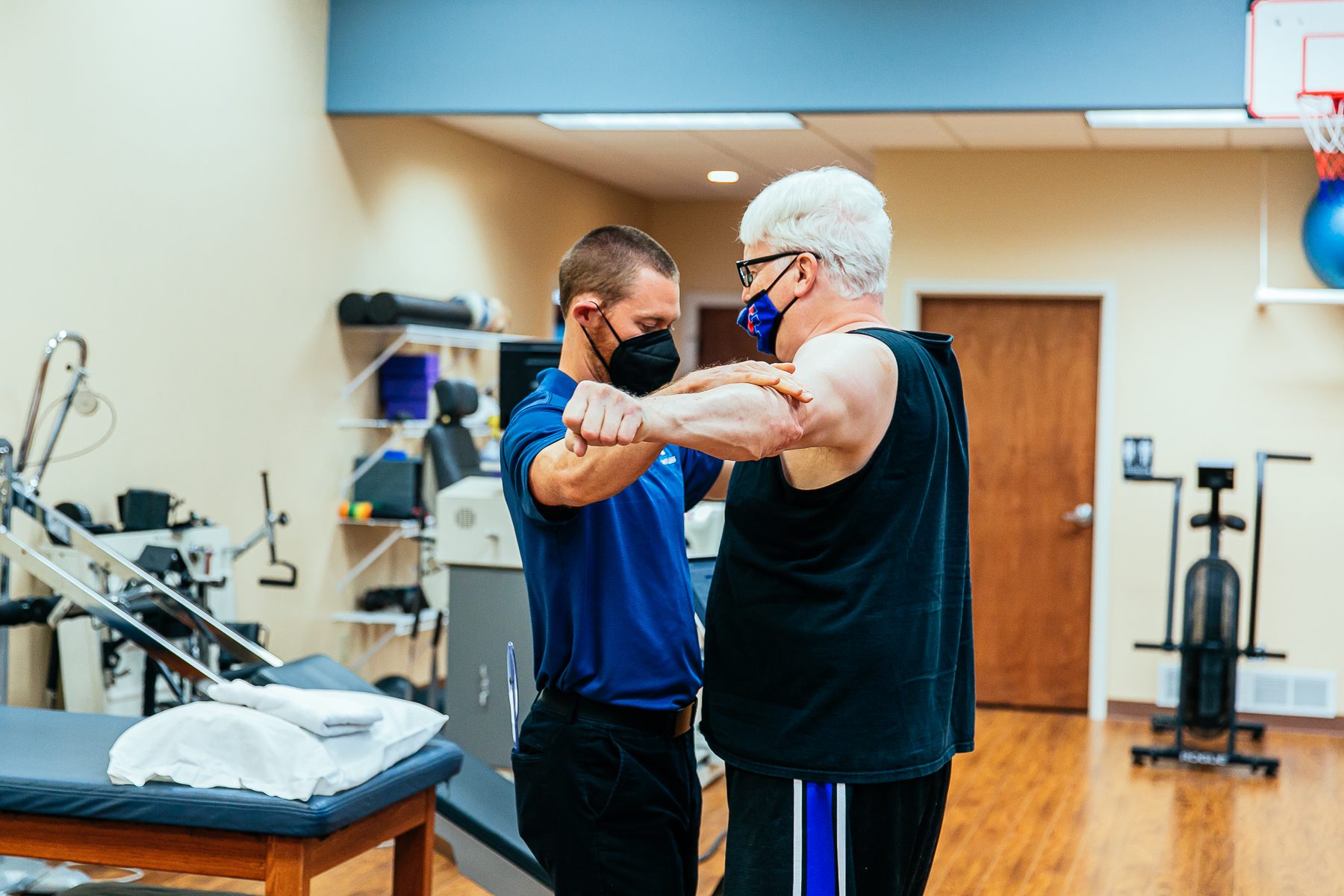
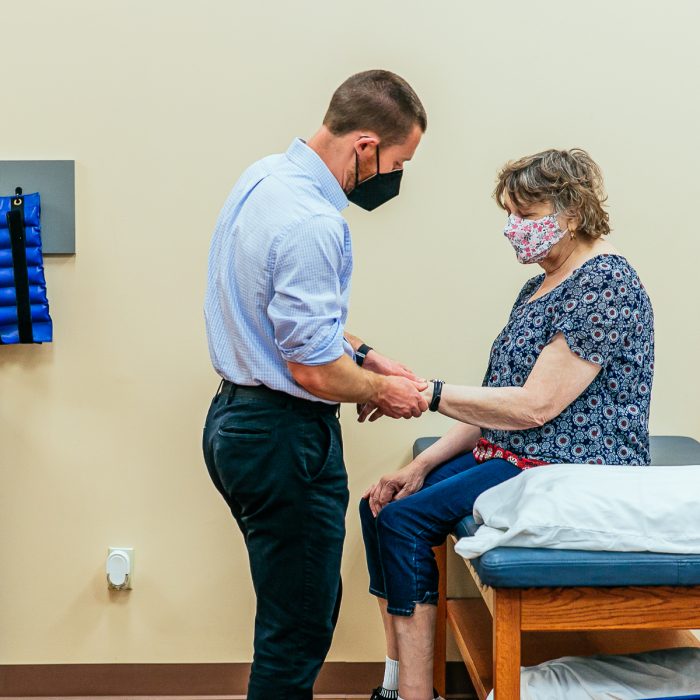
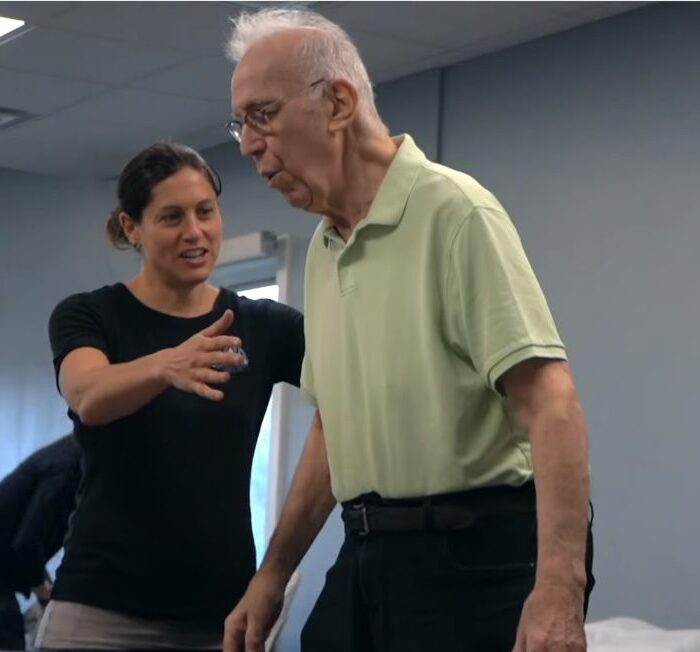
Most shoulder pain responds well to orthopedic physical therapy, often within a few weeks. At Limitless PT, Dr. Dan Bajus and our team evaluate not just where your pain is, but what’s driving it: your shoulder mechanics, your daily posture patterns, your activity load. Then we build a plan that targets the real problem instead of the symptom.
You don’t have to accept waking up in pain as your new normal. Many of our Victor, Brighton, Greece, and Cortland patients had been managing morning shoulder pain for months, sometimes years, before finding out that targeted PT resolved it faster than they expected.
Frequently Asked Questions
Why does my shoulder hurt more at night than during the day?
Movement during the day circulates blood and clears inflammatory byproducts from the shoulder joint. When you sleep, that movement stops for 6-8 hours. Inflammation pools, tissues swell, and nerve endings, undistracted by daytime activity, amplify pain signals. Even mild daytime irritation can feel severe by morning.
What is the best sleeping position for shoulder pain after sleeping?
Back sleeping with the affected arm supported on a pillow is the top PT recommendation because it eliminates direct compression on the shoulder joint. If back sleeping isn’t realistic, sleeping on the non-affected side with a body pillow to support the top arm is a strong second option. Stomach sleeping and sleeping directly on the affected shoulder both increase compression and should be avoided.
Can a pillow fix shoulder pain after sleeping?
A pillow can reduce compression and improve alignment, which helps break the nightly flare cycle. But it won’t resolve an underlying shoulder condition like rotator cuff tendinopathy, impingement, or bursitis. If your morning pain hasn’t improved after 2-3 weeks of consistent position and pillow changes, the problem is deeper than your sleep setup.
How long does it take to feel better with these changes?
Most patients following the Limitless PT Sleep Relief Protocol™ notice meaningful improvement within 2-4 weeks. Faster results come from combining position changes with the pre-sleep mobility routine. If improvement stalls or doesn’t come within that window, a PT evaluation will identify what’s not resolving on its own.
Is morning shoulder pain a sign of something serious?
Occasionally. Progressive worsening, significant weakness, pain that radiates down the arm with tingling or numbness, or pain that doesn’t ease with movement during the day are all worth a professional evaluation. Most morning shoulder pain is mechanical and responds well to PT. But if your symptoms fit any of the red flags above, get it checked.
Shoulder pain after sleeping is one of the most frustrating cycles to be stuck in, because every morning feels like a reset and nothing seems to work. But it’s almost always fixable. The key is understanding that sleep is revealing the problem, not creating it. Once you address what’s driving the irritation, through better overnight positioning, a consistent pre-sleep routine, and targeted treatment when needed, mornings start to feel different.
You don’t have to live with this. Ready to live a life without limits? Schedule your evaluation at your nearest Limitless Physical Therapy location and get back to doing the things you love, starting with a full night of sleep.
📞 Victor: (585) 869-5140 📞 Brighton: (585) 473-1290 📞 Greece: (585) 910-2242 📞 Cortland: (607) 408-5200
👉 Or schedule online at limitlesspts.com
If shoulder pain keeps interrupting your sleep, our team can treat the root cause, not just the symptom. Learn about orthopedic physical therapy in Rochester, or get guided exercises and progress tracking in the Limitless Life App.
About the Author
Dr. Dan Bajus, PT, DPT Founder, Limitless Physical Therapy Specialists
Dr. Bajus is a licensed Doctor of Physical Therapy with 15+ years of clinical experience treating orthopedic, sports, and movement-related conditions across Western New York. He founded Limitless Physical Therapy with the belief that no one should have to miss the things they love because of a physical limitation. He has personally treated more than 5,000 patients across the Victor, Brighton, Greece, and Cortland clinics.