
Your shoulder isn't the only suspect. When pain runs from your shoulder down to your elbow, the source could be your neck, your rotator cuff, your biceps tendon, or a nerve pathway you've never heard of. That nagging ache you feel in your upper arm might not even originate there—and that's actually useful information. Once you identify the pattern, the path forward gets much clearer.
At Limitless Physical Therapy, we see this presentation regularly. People come in pointing to their upper arm, convinced something is wrong "right here," only to discover the real issue is somewhere else entirely. The good news? Most causes of shoulder-to-elbow pain respond well to targeted treatment. You don't have to keep guessing—or keep hurting.
This guide walks you through the most common causes of pain from shoulder to elbow, helps you recognize patterns that point toward specific conditions, and shows you what physical therapy can do to get you back to the activities you love.
Why Does Pain Travel From Your Shoulder to Your Elbow?
Pain from shoulder to elbow often involves referred pain—where the source of the problem is in one location, but the sensation travels along nerve pathways or through connected tissues to another area. The shoulder, neck, and upper arm share overlapping nerve supplies, which is why a pinched nerve in your neck can produce pain you feel in your biceps, or why a rotator cuff problem can radiate down your arm.
This referral pattern isn't random. Your brain interprets signals from interconnected structures, and sometimes it gets the location slightly wrong. That's not a flaw in your nervous system—it's just how the wiring works. Understanding this explains why you might feel pain in your upper arm even though nothing is structurally wrong there.
The structures most likely to send pain into this region include the rotator cuff tendons, the long head of the biceps, the cervical spine (your neck), and several nerve pathways that run through your shoulder and down your arm. Each one creates a slightly different pain pattern—which is exactly what helps us figure out what's going on.
6 Common Causes of Pain From Shoulder to Elbow
When patients describe pain that spans from the shoulder to the elbow, we're usually looking at one of these six conditions. Each has distinctive features that help narrow down the source.
1. Rotator Cuff Injuries
The rotator cuff—a group of four muscles and tendons stabilizing your shoulder—is one of the most common sources of upper arm pain. When these tissues are irritated, torn, or strained, pain often radiates from the outer shoulder down the lateral (outside) aspect of the upper arm toward the elbow.
What it feels like: A deep ache in the shoulder that worsens with overhead movements, reaching behind your back, or lying on the affected side at night. The pain typically intensifies with activity and eases with rest.
Who gets it: Adults over 40, athletes who throw or swim, and anyone with repetitive overhead work. Research shows that rotator cuff problems affect a significant portion of the population—systematic reviews indicate the community prevalence of shoulder pain has a median of approximately 16%, though estimates range widely depending on age and population studied.
2. Biceps Tendinopathy
The biceps tendon attaches at the top of your shoulder, and when it becomes inflamed or degenerates, it sends pain down the front of your arm. This one is often mistaken for a shoulder-only problem because the pain starts at the shoulder joint.
What it feels like: Pain at the front of your shoulder that runs down the front of your upper arm. Lifting objects with your palm facing up, carrying grocery bags, or twisting motions (like turning a doorknob) often make it worse.
Who gets it: Weightlifters, CrossFit athletes, and people whose work involves repetitive lifting or carrying.
3. Cervical Radiculopathy (Pinched Nerve in the Neck)
Here's where referred pain gets interesting. A compressed nerve root in your neck—often from a herniated disc or bone spur—can produce pain that travels down your arm without any neck pain at all. Neck pain has an annual prevalence ranging between 30% and 50%, and many of those cases involve some degree of nerve involvement.
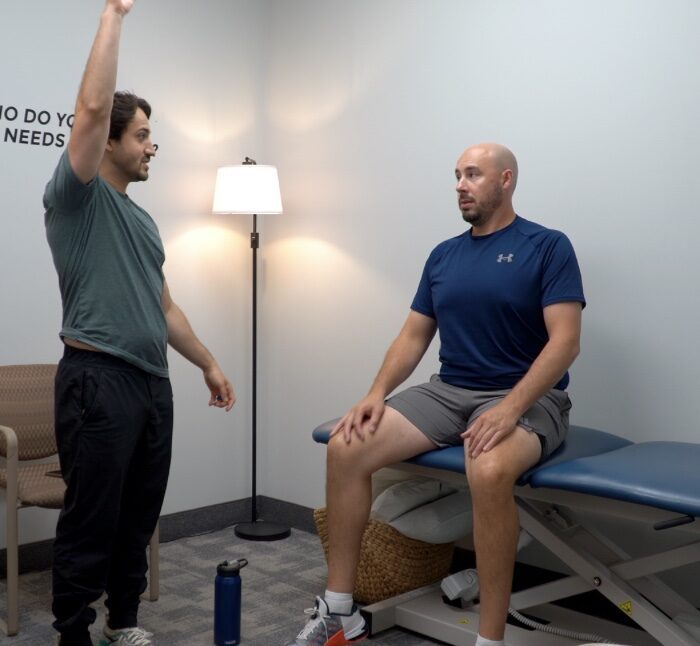
What it feels like: Electric, shooting, or burning pain that follows a specific path down your arm. You might also notice numbness, tingling, or weakness. A classic sign: raising your arm above your head actually relieves the pain (this is called the abduction relief sign).
Who gets it: Office workers, people who spend hours looking down at screens, and adults with age-related changes in their spine.
4. Thoracic Outlet Syndrome
When the nerves and blood vessels that pass through the space between your collarbone and first rib get compressed, the result is thoracic outlet syndrome. It's frequently unilateral (one side), affects women more than men, and peaks in the fourth decade of life.
What it feels like: Aching in your shoulder and arm, numbness in your fingers, and weakness that worsens when you hold your arms up (like blow-drying your hair or painting a ceiling). Symptoms often worsen with certain arm positions.
Who gets it: People who carry heavy bags on one shoulder, those with poor posture, and individuals who've had neck or shoulder trauma.
5. Shoulder Impingement Syndrome
When the rotator cuff tendons get pinched between the bones of your shoulder during arm movements, the result is impingement. It's closely related to rotator cuff problems and often precedes tears.
What it feels like: Pain in the outer shoulder and upper arm that flares with overhead reaching—grabbing something from a high shelf, swimming, or throwing. There's often a painful arc between about 60 and 120 degrees of arm elevation.
Who gets it: Swimmers, baseball players, tennis players, and anyone whose activities require repetitive overhead motion.
6. Referred Pain from the Neck or Upper Back
Even without a clearly pinched nerve, muscular tension and joint dysfunction in your cervical and upper thoracic spine can refer pain into your shoulder and down your arm. This type of referral is often more diffuse and harder to pinpoint than radiculopathy.
What it feels like: A vague, achy discomfort that seems to shift around. Neck stiffness or headaches often accompany it. The pain may worsen after prolonged sitting or screen time.
Who gets it: Desk workers, frequent drivers, and people who sleep in awkward positions.
How to Identify What's Causing Your Pain
The difference between these conditions often comes down to specific details about your pain. Before your evaluation, take note of these factors—they'll help your physical therapist or physician narrow things down faster.
Where exactly does it hurt? Pain on the outer arm often points toward the rotator cuff or impingement. Pain along the front of the arm suggests the biceps. Pain that follows a specific line from neck to fingers hints at nerve involvement.
What makes it worse? Overhead movements implicate the rotator cuff or impingement. Lifting with palms up suggests biceps. Pain that worsens when you turn your head or look down points toward your neck.
What makes it better? If raising your arm overhead relieves the pain, that's a strong sign of cervical radiculopathy. If rest helps, soft tissue injuries like rotator cuff problems are more likely.
Do you have other symptoms? Numbness and tingling suggest nerve compression—either at the neck or somewhere along the nerve pathway. Weakness in specific movements can help identify exactly which structure is involved.
When did it start? A sudden onset after trauma suggests an acute injury. Gradual onset over weeks or months points toward degenerative changes or overuse.
The answers to these questions don't replace a professional evaluation, but they do give you—and your provider—a starting point that saves time and gets you to the right treatment faster.
When Should You See a Professional?
Most shoulder-to-elbow pain doesn't require emergency care, but certain signs warrant prompt attention.
See a professional soon if you notice:
- Progressive weakness in your arm or hand
- Numbness that doesn't resolve
- Pain that wakes you consistently at night
- Symptoms that have persisted more than two to three weeks without improvement
- Difficulty performing daily activities like dressing, reaching, or carrying
Seek immediate care if you experience:
- Sudden, severe pain after trauma
- Inability to move your shoulder or arm
- Visible deformity
- Signs of circulation problems (pale, cold, or blue fingers)
For most people, shoulder-to-elbow pain is manageable—but getting an accurate diagnosis early prevents a minor issue from becoming a chronic one.
How Physical Therapy Treats Shoulder-to-Elbow Pain
Physical therapy is often the first-line treatment for the conditions causing shoulder-to-elbow pain, and the research backs this up. Studies show that approximately 73% to 80% of patients with rotator cuff problems find significant relief with conservative treatment. Even patients with full-thickness rotator cuff tears often respond well—the MOON Shoulder Group's research found that roughly 75% of patients achieved satisfactory outcomes without surgery, with only about one in four ultimately choosing surgical repair after completing a physical therapy program.
At Limitless Physical Therapy, your evaluation starts with understanding your specific pain pattern. We look at how you move, where your mobility is restricted, and which structures reproduce your symptoms. This isn't a one-size-fits-all approach—our orthopedic physical therapy services are built around finding the root cause of your pain.
What treatment typically includes:
Manual therapy addresses joint restrictions and muscle tension. If your thoracic spine is stiff or your shoulder capsule is tight, hands-on techniques can restore mobility that exercises alone won't fix.
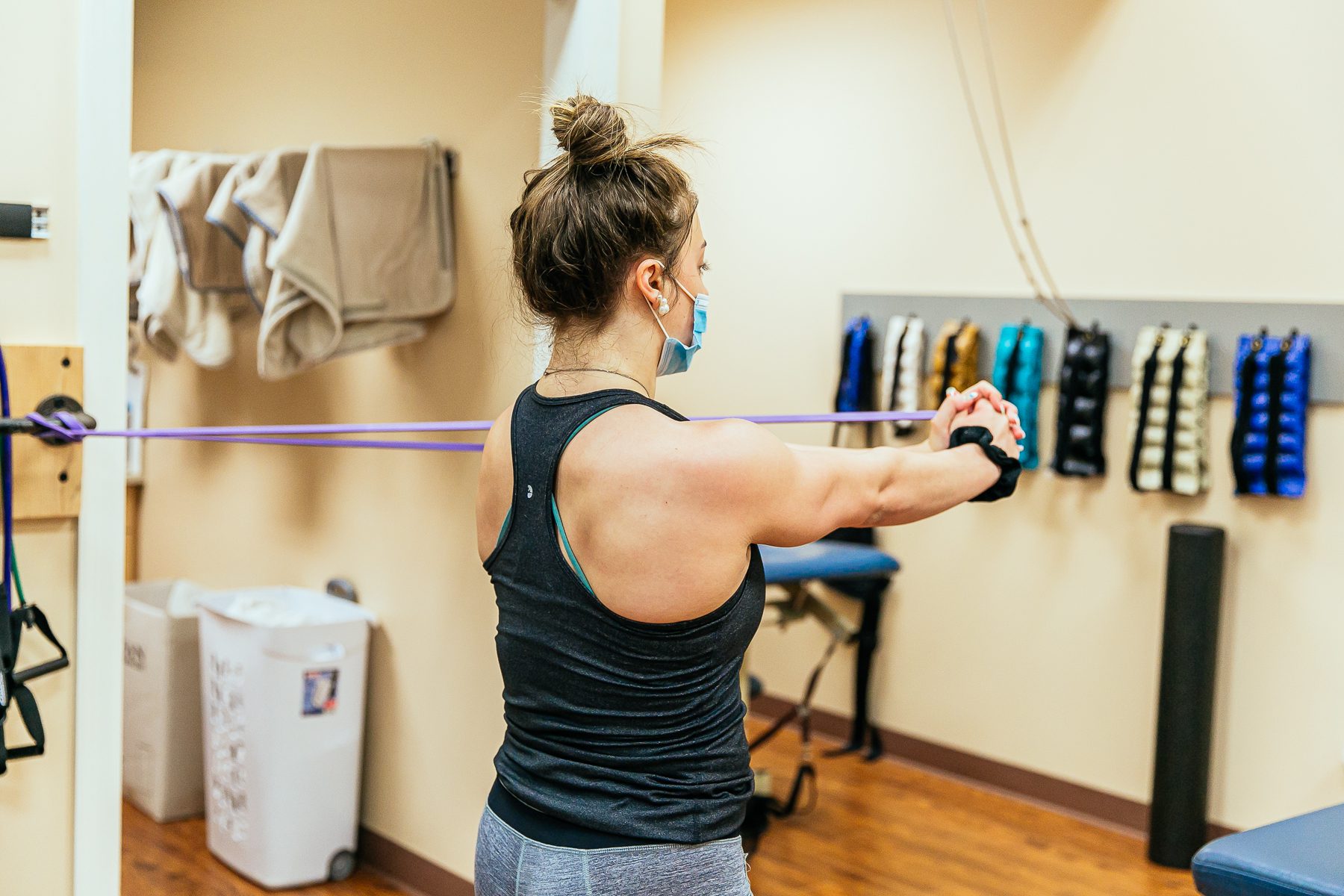
Targeted strengthening rebuilds the stability your shoulder needs. For rotator cuff problems, this means progressive loading of the cuff muscles. For cervical issues, it means addressing the deep neck flexors and scapular stabilizers that support your posture.
Movement retraining corrects the patterns that contributed to your pain. If your shoulder blade isn't moving properly during arm elevation, we address that. If your posture feeds into your symptoms, we work on sustainable changes.
Education helps you understand what's happening and what you can do about it. You'll leave each session knowing why you're doing specific exercises and how they connect to your goals—whether that's returning to tennis, sleeping through the night, or carrying your grandkids without pain. Learn more about how physical therapy relieves elbow and shoulder pain.
3 Things You Can Do Today for Relief
While you're waiting for your evaluation—or alongside your treatment—these strategies can help manage your symptoms.
1. Mind your sleeping position. If shoulder pain wakes you at night, avoid sleeping on the affected side. Try sleeping on your back with a small pillow under your arm, or on your opposite side with a pillow between your arms for support. For detailed guidance, see our complete guide to the best sleeping position for shoulder pain.
2. Check your posture at your workstation. Forward head posture and rounded shoulders contribute to both neck-referred pain and shoulder impingement. Position your screen at eye level, keep your shoulders back, and take breaks every 30 to 45 minutes to move. Our guide on stretches for shoulder, elbow, and wrist pain at work provides exercises you can do at your desk.
3. Gentle movement—not complete rest. Unless you've had a significant injury, complete immobilization often makes things worse. Gentle pendulum exercises (letting your arm hang and swing in small circles) and easy range-of-motion movements keep tissues healthy without stressing them.
These strategies won't replace professional treatment, but they can reduce your discomfort while you figure out your next steps.
Pain from shoulder to elbow can feel complicated, but in most cases, the cause follows a recognizable pattern. Whether it's your rotator cuff, biceps tendon, cervical spine, or a combination, targeted physical therapy can address the root cause—not just mask the symptoms.
You don't have to keep wondering what's wrong or wait until the pain becomes unbearable. At Limitless Physical Therapy, we help patients throughout the Rochester area break through these limitations every day. Our team at our Victor, Brighton, Greece, and Cortland locations is ready to evaluate your condition, identify the source, and create a customized plan that gets you back to doing the things you love with the people you love.
Ready to take control of your recovery? Schedule your evaluation at your nearest Limitless Physical Therapy location. You can also download the Limitless Life App for on-demand exercises and patient education to support your journey.
This content is for informational purposes only and does not constitute medical advice. If you're experiencing severe pain, numbness, weakness, or symptoms following trauma, please consult a healthcare provider.
![Arm Pain From Sleeping on Side: Causes and Fixes [PT Guide]](https://limitlesspts.com/wp-content/plugins/theplus_elementor_addon/assets/images/placeholder-grid.jpg)