Sleeping With Neck Pain: A Physical Therapist's Guide to Waking Up Without Stiffness
You've tried three different pillows this month. You flip from side to back to stomach, searching for relief. And every morning, your neck feels worse than when you went to bed. The problem isn't that you haven't found the right position, it's that position alone was never the full answer.
Neck pain affects over 200 million people worldwide, and roughly 70% of those with chronic neck pain report poor sleep quality. After 15 years of treating neck pain at our Victor, Brighton, Greece, and Cortland clinics, we've seen this pattern countless times: patients focus entirely on finding the "perfect" sleeping position while overlooking the support system that makes any position work. The good news? Once you understand what actually keeps your cervical spine comfortable through the night, waking up stiff becomes the exception rather than the rule.
This guide breaks down the sleep strategies our physical therapy team recommends, the same ones that help our Rochester-area patients get back to restful nights and pain-free mornings.
Why Does Neck Pain Get Worse at Night?
Your neck works hard all day. Muscles fire constantly to hold your head upright, adjusting to every glance at your phone, every turn of your head, every hour at a desk. Sleep should be recovery time. But here's where it goes wrong.
When you lie down, your neck muscles finally relax, and that's when poor positioning does its damage. Your head weighs roughly 10-12 pounds. In a supported position, that weight distributes evenly. In an unsupported position, it pulls on muscles and compresses joints for six to eight hours straight.
The cervical spine has a natural curve (a gentle C-shape that curves toward your throat). Maintaining that curve during sleep allows muscles to truly rest and joints to decompress. Flatten that curve with a pillow that's too thin, or reverse it with one that's too thick, and you're essentially holding a sustained stretch all night. No muscle recovers well under constant tension.
Many of our patients describe waking with stiffness that fades after 30-60 minutes of moving around. That's the signature of positional stress, not injury, but accumulated strain from hours of poor alignment. The encouraging part? This type of morning stiffness responds well to the right adjustments.
Best Sleeping Positions for Neck Pain Relief
Back sleeping with proper support keeps your cervical spine in a neutral position and distributes your body weight evenly across the mattress. It's the position most physical therapists recommend first. Your head faces the ceiling, eliminating the rotation that comes with stomach sleeping. A medium-loft pillow that cradles your head while supporting the natural curve of your neck works best here, think of filling the space between your neck and the mattress without pushing your chin toward your chest.
Side sleeping is the most common position (over 60% of adults prefer it) and works well for neck pain when done correctly. The key is matching your pillow height to your shoulder width. Your ear should align with your shoulder, and your nose should point straight ahead, not angled up or down. Most side sleepers need a firmer, taller pillow than back sleepers, the pillow has to fill the gap between your shoulder and head to keep your spine straight.
A pillow between your knees can help too. It prevents your top leg from pulling your spine into rotation, which can create secondary tension in your neck.
Stomach sleeping is the position to avoid. It forces your neck into rotation for hours, imagine holding your head turned 90 degrees to one side while awake. You wouldn't do it for five minutes, let alone five hours. Stomach sleeping also tends to flatten the lower back, creating a chain of misalignment that reaches up to the neck.
If you've slept on your stomach for years, switching feels uncomfortable at first. Start the night in a side position with a body pillow for support. You may roll onto your stomach as you sleep, but over time your body adapts to new patterns.
How to Choose a Pillow That Actually Supports Your Neck
The "best pillow" varies person to person, but the criteria for choosing one don't. Here's what actually matters.
Pillow height (loft) should match your sleep position and body frame. Back sleepers generally need 3-5 inches of loft. Side sleepers need 4-6 inches or more, depending on shoulder width. Broader shoulders require a taller pillow to keep the spine level. A simple test: lie in your usual position and have someone check whether your spine looks straight from behind. If your head tilts up or down, your pillow height is wrong.
Firmness matters more than material. Memory foam, latex, down, buckwheat, the material is secondary to whether the pillow holds its shape under your head's weight. A pillow that compresses completely defeats its purpose. You need enough firmness to maintain the height you start with, but enough give that your head doesn't feel like it's resting on a rock.
| Sleep Position | Recommended Loft | Firmness | Key Function |
| Back sleeper | 3-5 inches | Medium | Support neck curve without flexing chin forward |
| Side sleeper | 4-6+ inches | Medium-firm | Fill shoulder-to-ear gap, keep spine level |
| Combination | Adjustable or medium | Medium | Accommodate position changes through the night |
The towel roll test: If you're unsure about your current pillow, try rolling a small hand towel and placing it inside your pillowcase at the base. This provides additional neck support and helps you feel whether more cervical support reduces your morning stiffness. Many patients discover their pillow is fine for their head but provides almost nothing for their neck.
Replace pillows every 2-3 years. They lose structural integrity over time, even if they look fine. A pillow that worked well two years ago may be contributing to your pain today.
Pre-Sleep Routine to Reduce Morning Stiffness
What you do in the 15 minutes before bed can influence how your neck feels eight hours later. Our clinical team teaches a brief routine that helps muscles release tension before you ask them to stay still all night.
Chin tucks (10 repetitions): Sit or stand with good posture. Gently draw your chin straight back, as if making a double chin. Hold for 2 seconds, release. This activates the deep neck flexors and stretches the muscles at the base of your skull, often the tightest spots for people with neck pain.
Gentle neck rotation: Turn your head slowly to each side, going only as far as comfortable. Hold each side for 5-10 seconds. Don't force range of motion, you're signaling relaxation, not pushing through barriers.
Upper trap stretch: Tilt your ear toward your shoulder and hold for 20-30 seconds each side. You can gently rest your hand on your head to add slight pressure, but let gravity do most of the work.
Shoulder blade squeezes: Squeeze your shoulder blades together and down, holding for 5 seconds. This counteracts the forward-rounded posture most people hold all day, reducing the load on posterior neck muscles.
The whole routine takes about 5 minutes. It won't fix structural problems, but for the many patients whose neck pain stems from muscle tension and postural habits, this pre-sleep reset makes a noticeable difference in morning stiffness.
The Limitless Life App includes video demonstrations of these movements plus additional exercises our team recommends for ongoing neck health.
When Should You See a Physical Therapist for Neck Pain?
Not all neck pain is the same, and position changes won't solve everything. Here's when it makes sense to get evaluated.
Pain that radiates into your arm or hand may indicate nerve involvement. Numbness, tingling, or weakness that travels below your shoulder warrants professional assessment, these symptoms suggest more than muscle tension. Conditions like a herniated disc can cause these symptoms and respond well to physical therapy when caught early.
Pain lasting more than 2-3 weeks despite consistent home strategies isn't normal. Acute muscle strain typically improves within 10-14 days with proper rest and positioning. Pain that lingers suggests something else is going on.
Neck pain with dizziness, headaches, or jaw pain can have interconnected causes. Our Greece clinic specializes in vestibular and balance issues that often overlap with cervical dysfunction.
Stiffness that doesn't improve after moving around for an hour or more could indicate joint involvement or arthritis rather than simple muscle tension.
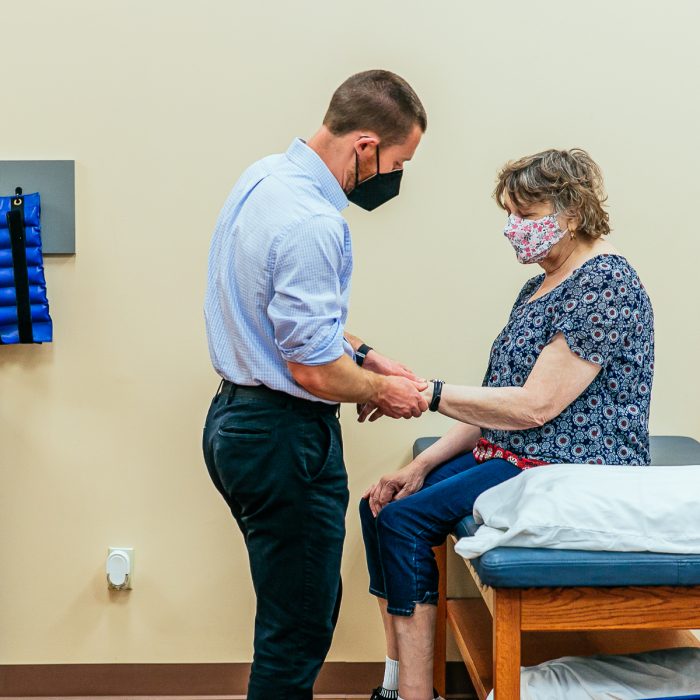
A physical therapy evaluation identifies what's driving your pain and whether your sleep setup is part of the problem or unrelated to it. From there, we create a personalized plan that addresses your specific situation, not generic advice that may or may not apply to you.
Ready to Wake Up Without Neck Pain?
The right sleeping position combined with proper neck support can transform your mornings. But the goal isn't just fewer aches, it's getting back to the things you love without physical limits holding you back.
Start tonight with one change: evaluate whether your pillow actually supports your neck in your preferred sleep position. Add the 5-minute pre-sleep routine. Give it two weeks of consistency. Many of our Rochester-area patients notice improvement within that window.
If you've made these adjustments and still wake up stiff and sore, you don't have to accept it as normal. Our team at Limitless Physical Therapy Specialists is ready to help you find what's actually causing your neck pain and create a plan to move past it.
Ready to live a life without limits? Schedule your evaluation at our Victor, Brighton, Greece, or Cortland location, or call (585) 869-5140 to get started.