What Physical Therapy Does for a Herniated Disc, and What Recovery Really Looks Like
Last updated: March 2026
Most people with a herniated disc don't need surgery. Research shows less than 10% ever do. But knowing that doesn't make the pain easier to manage or the decision less confusing. Physical therapy for a herniated disc is the first-line treatment recommended by every major spine guideline, and for most patients, it works.
At Limitless Physical Therapy, we've helped over 5,000 patients across Victor, Brighton, Greece, and Cortland navigate herniated disc recovery. This guide breaks down what PT actually does, what recovery looks like week by week, which exercises help, and what the research really shows when you compare PT to surgery.
Can Physical Therapy Fix a Herniated Disc?
Yes. Physical therapy relieves herniated disc symptoms for 70-90% of patients without surgery, and long-term outcomes match surgical results at the 1-2 year mark. PT reduces pain, restores movement, and helps the body reabsorb disc material naturally, a process called spontaneous resorption confirmed in a 2017 PMC meta-analysis showing herniation volume decreases significantly with conservative care alone.
That last point surprises most patients we see. The disc doesn't just stay herniated while you wait out the pain. In many cases, the body actively breaks down and reabsorbs the protruding disc material over weeks and months. Physical therapy supports that process by reducing nerve irritation, improving circulation around the disc, and building the spinal stability that prevents re-injury.
"Fix" is the right word. Not because PT magically repairs a disc overnight, but because most people who complete a structured program return to full activity without surgery. That's the standard, not the exception.
What Causes a Herniated Disc and Who Gets Them
A herniated disc occurs when the tough outer layer of an intervertebral disc (the annulus fibrosus) tears, allowing the soft inner material (nucleus pulposus) to push outward. When that material presses on a nearby nerve root, it causes the radiating pain, numbness, and weakness that bring most patients into our clinics.
Lumbar Disc Herniation
The lower back is where most disc herniations occur. The L4-L5 and L5-S1 segments carry the most mechanical load and are the most common sites. When a lumbar disc presses on the sciatic nerve, it produces
sciatica: pain, tingling, or numbness traveling from the lower back through the buttock and into the leg or foot. Most patients at our Victor and Brighton clinics present with some degree of sciatica alongside their back pain.
Cervical Disc Herniation
Herniations in the neck are less common but still significant.
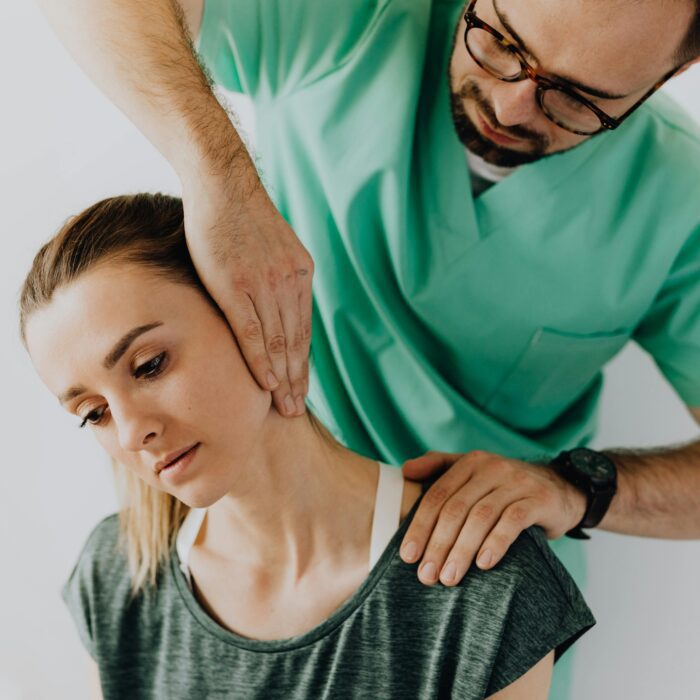
Cervical radiculopathy, where a disc presses on a nerve root in the neck, produces pain, numbness, or weakness that radiates into the shoulder, arm, or hand. This is frequently misread as a shoulder injury, which is why a thorough PT evaluation matters.
Who Is at Risk
The condition most often affects people between 30 and 50. Men are diagnosed roughly twice as often as women. Risk factors include repetitive lifting or twisting, prolonged sitting, poor posture, excess body weight, smoking, and age-related wear. Sometimes there is no single cause. The disc fails under cumulative, low-grade stress over years.
Week-by-Week Herniated Disc Recovery Timeline
Recovery varies based on age, disc severity, and how consistently you follow your program. Research and 15+ years of clinical experience at Limitless PT give us a clear picture of what to expect.
| Timeframe |
What Happens |
Typical Milestones |
| Days 1-7 |
Pain management, gentle movement |
Short walks, basic posture corrections, ice and heat for inflammation |
| Weeks 2-4 |
Gentle mobility work begins |
Reduced muscle spasm, improved range of motion, less nerve irritation |
| Weeks 6-12 |
Core strengthening, functional rehab |
Resuming daily activities, sitting longer without pain, light lifting |
| Beyond 12 weeks |
Maintenance and prevention |
Return to sport, heavier lifting, full work capacity |
Most patients report 25-40% pain reduction within the first month and meaningful improvement by the 3-month mark. Younger patients with mild herniations often move faster. Older patients or those with significant nerve compression may take longer, but progress continues with consistent effort.
The 2-6 week mark is when most patients notice the shift from "this is terrible" to "I can see this working." That window is also when some patients get tempted to stop because they feel better. Don't. The strengthening phase that follows is what makes the improvement last.
A patient at our Victor clinic came in unable to sit for more than 20 minutes due to lower back pain radiating into his leg. After 10 weeks of guided PT, including manual work, core stabilization, and ergonomic training, he returned to full-time desk work without pain.
Best Physical Therapy Exercises for Herniated Disc Relief
The most effective PT exercises for a herniated disc reduce nerve irritation, build spinal stability, and restore function without loading the disc further. Your specific program depends on your symptoms, but these are the movements we rely on most at Limitless PT.
Exercises that help
- McKenzie Extension (Cobra Press-Up): Lie on your stomach and press your upper body up with your arms, keeping your hips on the floor. The McKenzie method is one of the most evidence-backed approaches for lumbar disc herniation. It helps shift disc material away from the nerve root and reduces the radiating pain that comes with sciatica.
- Bird-Dog: From a hands-and-knees position, extend one arm and the opposite leg simultaneously, holding for 5-10 seconds. This builds deep core stability through the transverse abdominis and multifidus without loading the spine.
- Pelvic Tilts: Lying on your back with knees bent, gently flatten your lower back into the floor and hold. Simple but effective for activating the core stabilizers before progressing to more demanding exercises.
- Cat-Cow Stretch: On hands and knees, alternate between arching and rounding your back. Improves spinal mobility and reduces stiffness, particularly useful in the early weeks.
- Supine Hamstring Stretch: Lying on your back, bring one knee toward your chest and gently straighten the leg. Tight hamstrings pull on the lower spine and worsen disc irritation.
- Walking: Underrated and necessary. Short, consistent walks (start at 5-10 minutes, 2-3 times daily) keep you moving, boost circulation, and reduce inflammation without loading the disc.
Exercises to avoid
- Sit-ups and crunches (increase intradiscal pressure significantly)
- Forward toe touches (flexion-based loading aggravates the disc)
- Heavy deadlifts or squats before PT clearance
- Twisting movements like Russian twists
- Running in the early weeks before the disc stabilizes
Physical Therapy vs. Surgery: What the Evidence Shows
This is the question most patients are really asking. Here is what the research actually shows.
| Factor |
Physical Therapy |
Surgery |
| Patients who recover without procedure |
70-90% (WFNS 2024) |
N/A |
| Short-term pain relief |
Gradual over 6-12 weeks |
Faster initial relief |
| Long-term outcome at 1-2 years |
Comparable to surgery |
Comparable to PT |
| Risk |
Minimal when guided by a PT |
Infection, nerve damage, anesthesia |
| Cost |
Lower, outpatient |
Higher, hospital and surgical fees |
| Return to full activity |
3-6 months typical |
3-6 months including post-surgical rehab |
The most important row in that table is long-term outcome. The SPORT trial, one of the largest spine studies ever conducted, followed patients for up to 8 years. Its conclusion: while surgery offers faster initial relief for some patients, long-term outcomes between surgical and conservative treatment are comparable. A 2023 systematic review in BMJ reinforced this finding, showing no significant difference between groups at the 1 and 2-year marks.
The World Federation of Neurosurgical Societies updated its recommendations in 2024 to state clearly: conservative treatment, including physical therapy, should be the first-line approach for lumbar disc herniation in patients without severe neurological deficits.
That's not a PT organization saying that. That's neurosurgeons.
Our Rochester and Brighton patients who complete a full PT program rarely end up in a surgeon's office. Not because we talk them out of it, but because they don't need to go.
When Surgery Becomes the Right Call
PT is the right starting point for most people. But there are situations where surgery is appropriate and shouldn't be delayed.
Get a surgical evaluation promptly if you have:
- Cauda equina syndrome: loss of bladder or bowel control, or saddle numbness in the inner thighs and groin. This is a medical emergency.
- Progressive neurological weakness: foot drop, difficulty walking, or rapidly worsening weakness in the arm or leg
- Severe, unmanageable pain not responding after 6-8 weeks of consistent PT
- Symptoms continuing to worsen despite conservative care
For everyone else, start with PT. The data is clear that long-term outcomes are comparable whether you have surgery or not, and PT carries none of the surgical risks.
If you've been told surgery is your only option, a PT evaluation first costs you nothing but time. Many of our patients arrived with that recommendation and returned to full function without going to surgery.
Frequently Asked Questions
How long does physical therapy take to work for a herniated disc?
Most patients notice meaningful improvement within 2-6 weeks of starting PT. Full recovery typically takes about 3 months, though more severe herniations or significant nerve compression may take longer. Patients who attend consistently and complete their home exercises recover faster.
Can a herniated disc heal on its own?
Some natural recovery occurs in most cases over time. Research confirms that herniated disc material often shrinks on its own through spontaneous resorption. Physical therapy accelerates this process by reducing nerve irritation, improving blood flow, and building the spinal stability that prevents further stress on the disc during daily activities.
Is physical therapy painful for a herniated disc?
Some discomfort during certain movements is normal early in treatment. A good PT program should never cause sharp, shooting, or worsening nerve pain. If it does, your therapist adjusts the approach. Most patients find their overall pain levels drop within the first few sessions, even if the process requires some adjustment.
What is the difference between a herniated disc and sciatica?
A herniated disc is a structural problem: disc material pressing outward beyond its normal boundary. Sciatica is a symptom: radiating pain, tingling, or numbness traveling down the leg. Most cases of sciatica are caused by a herniated lumbar disc pressing on the sciatic nerve. They often occur together, and PT addresses both.
Can I exercise with a herniated disc?
Yes. Total rest slows recovery and weakens the muscles that support your spine. Gentle walking, extension-based movements, and core stabilization exercises are safe and beneficial from the early stages. High-impact activity, heavy lifting, and flexion-loading movements should wait until your PT clears you.
Physical therapy for a herniated disc is not a backup plan or a way to delay the inevitable. For the vast majority of patients, it is the treatment that works. The evidence is strong, the outcomes are real, and the risks are minimal compared to surgery.
You don't have to live with this. Whether your pain started last week or has been limiting you for months, the team at Limitless Physical Therapy will find what's driving it and build a plan to fix it. Many of our Victor, Brighton, Greece, and Cortland patients walked in barely able to sit and left with their lives back. Ready to live a life without limits? Schedule your evaluation today.
📞
Victor: (585) 869-5140 📞
Brighton: (585) 473-1290 📞
Greece: (585) 910-2242 📞
Cortland: (607) 408-5200
👉 Or
book online. Local to Rochester? See
herniated disc physical therapy in Rochester.
About the Author
Dr. Dan Bajus, PT, DPT Founder, Limitless Physical Therapy Specialists
Dr. Bajus is a licensed Doctor of Physical Therapy with 15+ years of clinical experience treating orthopedic and spine conditions across Western New York. He has personally treated more than 5,000 patients at the Victor, Brighton, Greece, and Cortland clinics.