How to Sleep With Neck Pain and Wake Up Feeling Better
You adjust your pillow for the fifth time. You flip from your back to your side. By 2 AM, you’re stacking pillows, unstacking pillows, wondering if sleep will ever feel restful again. If neck pain has turned your bed into a nightly battle, you’re not alone, research shows 30-50% of adults experience neck pain annually, and sleep-related neck pain affects up to 40% of those dealing with chronic issues.
Here’s what most people miss: your sleeping position matters, but it’s only part of the equation. The way you support your cervical spine, and what you do before you even get into bed, determines whether you wake up stiff or actually rested. After treating over 5,000 patients at Limitless Physical Therapy, we’ve seen the same pattern. People try new pillows, new mattresses, new positions. Nothing sticks. That’s because they’re treating symptoms without understanding why their neck hurts more at night in the first place.
This guide gives you the specific positions, pillow setups, and pre-sleep habits that address the root cause of your overnight neck strain. You can start tonight.
Why Does Neck Pain Get Worse When You Lie Down?
Your neck works hard all day. Every time you look at your phone, hunch over a keyboard, or crane forward while driving, the muscles supporting your cervical spine absorb that strain. By evening, they’re fatigued. And when you lie down, something shifts.
During the day, you constantly adjust your posture, even slightly, to relieve pressure. At night, you lose that ability. You settle into one position for hours, and if that position doesn’t support your spine’s natural curve, tension builds instead of releases. The muscles that were already overworked now have nowhere to go.
Inflammation plays a role too. Fluid accumulates around irritated joints and tissues when you’re horizontal, which is why many people feel their stiffest first thing in the morning. Your body isn’t failing you. It’s responding predictably to a setup that doesn’t match what your spine needs.
The good news? Once you understand this, you can change it. The position you sleep in, and how you support it, can turn your bed from a pain trap into a recovery tool.
Neck Strain From Sleeping: How to Tell a Strain From a Stiff Neck
A stiff neck from a bad pillow loosens up within an hour of getting moving. A neck strain from sleeping is different: there is a specific sore spot when you press on one side, turning your head one way hurts more than the other, and it lingers for days instead of hours. Strains still settle on their own in most cases, and the positions below help either way. If the pain is running into your shoulder blade or down your arm, or it is still there after a week, that is when a visit with a physical therapist is worth it.
What’s the Best Sleeping Position for Neck Pain?
The best sleeping position for neck pain is back sleeping with a pillow that supports the natural curve of your cervical spine, or side sleeping with your pillow height matching the distance from your ear to the outside of your shoulder. Both positions keep your spine in a neutral alignment and reduce strain on the muscles, discs, and joints in your neck overnight.
Research backs this up: studies show back sleeping correlates with 30% lower neck pain risk compared to other positions, while side and stomach sleeping are linked to 1.5-2x higher pain severity due to prolonged cervical strain.
Let’s break down why each works, and when to choose one over the other.
Back Sleeping: The Gold Standard
When you sleep on your back with proper support, your head, neck, and spine form a straight line. There’s no rotation, no side-bending, no awkward angles. Your neck muscles can actually relax because they’re not fighting gravity or compensating for misalignment. Randomized trials show back sleeping can reduce neck pain by 25-55% over 4-12 weeks compared to stomach sleeping.
The catch? Your pillow height matters more than you think. Too high, and your chin tucks toward your chest, straining the back of your neck. Too flat, and your head drops back, compressing the joints in your upper spine. You want a pillow that fills the natural curve behind your neck without pushing your head forward.
Many of our Rochester-area patients discover they’ve been using pillows that are far too thick. A common test: lie on your back and have someone look at you from the side. Your forehead and chin should be roughly level. If your chin points up or tucks down, adjust.
Side Sleeping: A Close Second
Side sleeping works well for neck pain, when done right. The key is keeping your spine in a straight horizontal line from your head to your tailbone. That means your pillow needs to be thick enough to fill the gap between your ear and the mattress.
Most side sleepers underestimate how much support they need. Pressure-mapping research confirms that pillow height should match your ear-to-shoulder distance, typically 4-6 inches for most adults. If your pillow compresses and your head drops toward the mattress, your neck bends sideways for hours. That’s a recipe for morning stiffness and tension headaches.
One tip that makes a difference: keep your top arm supported with a small pillow or folded blanket in front of you. This prevents your shoulder from rolling forward and pulling on your neck.
What About Stomach Sleeping?
This one’s tough. Stomach sleeping forces your neck into 40-60 degrees of rotation for extended periods, there’s no way to breathe face-down, so your head turns left or right. EMG and MRI studies show this sustained rotation significantly elevates muscle strain and morning pain.
If you’re a committed stomach sleeper, transitioning takes time. Start by sleeping on your side with a body pillow to prevent rolling onto your stomach. It’s not an overnight fix, but your neck will thank you.
How to Set Up Your Pillow for Proper Neck Support
Your pillow is not just a head rest. It’s the primary support system for your cervical spine while you sleep. Getting this right makes everything else easier, and the research is clear: contoured cervical pillows outperform traditional pillows, showing 40-60% greater pain relief in meta-analyses by properly supporting your neck’s natural lordotic curve.
For Back Sleepers
Use a contoured pillow or a medium-loft pillow that cradles the curve of your neck. The pillow should support the hollow behind your neck without lifting your head too high. Some people do well with a small rolled towel placed inside the pillowcase at the bottom edge for extra cervical support.
Test it: When lying on your back, you should be able to breathe easily, and your neck muscles should feel like they can let go, not like they’re holding your head in place.
For Side Sleepers
You need a firmer, higher-loft pillow. Measure the distance from your ear to the tip of your shoulder while standing, this is typically 4-6 inches for most adults. That’s roughly the pillow height you need. If your pillow compresses significantly under the weight of your head, it’s too soft for side sleeping.
A common mistake: using the same pillow for back and side sleeping. These positions have completely different support needs. If you switch positions throughout the night, consider a pillow with adjustable fill or keep two pillows with different lofts within reach.
Mattress Considerations
Your pillow can only do so much if your mattress creates problems. A mattress that’s too soft lets your body sink unevenly, throwing off spinal alignment. One that’s too firm doesn’t contour to your curves. Sleep lab studies show medium-firm mattresses reduce spinal stress by 20-30% compared to soft or ultra-firm options. Most people with neck pain do better with a medium-firm mattress that supports the heavier parts of their body (hips, shoulders) while still allowing some give.
5 Pre-Sleep Habits That Reduce Overnight Neck Tension
Here’s what separates people who wake up stiff from those who don’t: what happens in the hour before bed affects how your neck responds to eight hours in one position. Your sleeping setup matters, but so does the state your muscles are in when you lie down.
1. Do 5-10 Minutes of Gentle Neck Stretches
Nothing aggressive. Slow chin tucks, ear-to-shoulder stretches, and gentle rotation help release the tension that accumulated during the day. Hold each stretch for 20-30 seconds without forcing. Randomized controlled trials show pre-bed neck stretches reduce overnight tension by 25-40% and decrease morning stiffness by improving range of motion before sleep.
2. Stop Screens 30 Minutes Before Bed
This isn’t just about blue light and sleep quality, though that matters too. It’s about posture. Scrolling your phone in bed puts your neck in flexion, often for longer than you realize. If you must use a device, prop it up at eye level so you’re not looking down.
3. Check Your Evening Posture
How did you spend the last few hours? If you were slouched on a couch watching TV, your neck was likely protruding forward. Spend even five minutes sitting tall or lying flat before bed to give your spine a chance to decompress.
4. Apply Heat to Your Neck and Upper Back
A heating pad or warm towel on your neck for 15-20 minutes before bed increases blood flow and relaxes muscle tissue. Research shows moist heat therapy reduces pain by 20-35% in people with chronic neck tension. This is especially helpful if your neck pain tends to spike after long days at a desk. Heat primes your muscles for recovery instead of locking them into their stressed state.
5. Sleep at the Same Time Each Night
Consistency matters. When your body knows sleep is coming, it starts preparing, muscle tension decreases, breathing slows. Irregular sleep schedules keep your system on alert, which means your muscles stay tighter even after you lie down.
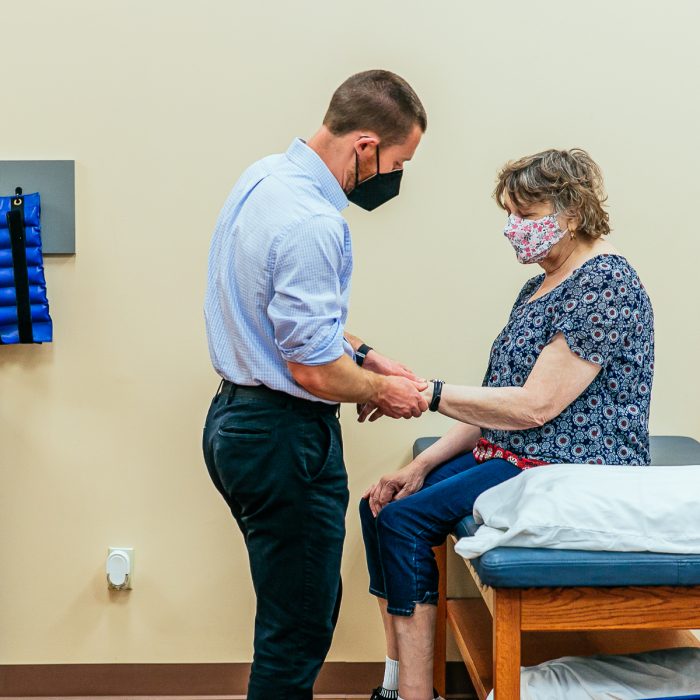
When Should You See a Physical Therapist for Neck Pain?
Sometimes the best pillow and perfect position aren’t enough. According to guidelines from the American Physical Therapy Association, here’s how to know when it’s time to get professional help.
Consider scheduling an evaluation if:
Your neck pain has lasted more than 4-6 weeks despite trying these strategies. Pain that persists suggests something beyond positional strain, there may be joint restrictions, muscle imbalances, or nerve involvement that need hands-on treatment.
You’re experiencing numbness, tingling, or weakness in your arms or hands. These symptoms indicate possible radiculopathy, your neck issue may be affecting the nerves that travel to your upper extremities. A physical therapist can assess whether the nerve irritation is positional or structural and guide you toward the right interventions.
Your range of motion is significantly limited. If you can’t turn your head fully or tilt without sharp pain, there’s likely a mechanical restriction that stretching alone won’t fix. Manual therapy and targeted exercises can restore mobility faster than waiting it out.
You have other concerning symptoms such as pain following trauma, fever, or balance issues. These warrant prompt evaluation.
You don’t have to live with this limitation. At Limitless Physical Therapy, we help patients throughout Victor, Brighton, Greece, and Cortland identify exactly what’s causing their neck pain and build a plan to fix it, not just manage it.
Tonight’s Neck Pain Sleep Checklist
Use this checklist before bed to set yourself up for a better night:
Position: Choose back sleeping or side sleeping. Avoid stomach sleeping.
Pillow Check: Back sleepers: pillow supports neck curve, head not pushed forward. Side sleepers: pillow fills the 4-6 inch gap from ear to shoulder, head stays level.
Pre-Bed Prep: Complete 5-10 minutes of gentle neck stretches. Apply moist heat for 15-20 minutes if neck feels tight.
Screen Cutoff: Put devices away 30 minutes before sleep or prop at eye level.
Environment: Consistent bedtime. Room cool and dark.
If you’ve followed this checklist for two weeks and still wake up with neck pain, that’s your signal. Your body is telling you it needs more than positioning adjustments.
Ready to wake up without neck pain? Schedule an evaluation at Limitless Physical Therapy and let’s build a plan that gets you back to doing the things you love, starting with actually sleeping through the night.
If neck pain keeps disrupting your sleep, our team can treat the root cause, not just the symptom. Learn about orthopedic physical therapy in Rochester, or get guided exercises and progress tracking in the Limitless Life App.
Dr. Dan Bajus, PT, DPT, is the founder of Limitless Physical Therapy Specialists with locations in Victor, Brighton, Greece, and Cortland, NY. With over 15 years of clinical experience and more than 5,000 patients treated, Dr. Bajus and his team specialize in helping people move, feel, and live without limits.