The pain started in your lower back. Then it moved into your buttock, down the back of your thigh, and maybe all the way to your calf or foot. Now you're searching for sciatica exercises that will make it stop, and you're finding dozens of articles with contradictory advice. Stretch your hamstrings. Don't stretch your hamstrings. Bend forward. Never bend forward. Its enough to make you want to give up and just suffer through it.
Here's the problem with most sciatica exercise advice: it treats all sciatica the same. But sciatica isn't a single condition. Its a symptom, and the exercises that help one person's sciatic pain can actually make another person's pain worse. What works depends entirely on what's causing the nerve irritation in the first place.
At Limitless Physical Therapy, we've treated thousands of patients with sciatica across our Victor, Brighton, Greece, and Cortland locations. Over 15 years of clinical experience has shown us that the right exercises, done in the right sequence, can provide meaningful relief, sometimes within days. The wrong exercises can set you back weeks. This guide breaks down what physical therapists actually recommend, and just as importantly, what you should avoid until you understand your specific situation better.
Why Most People Do Sciatica Exercises Wrong
The biggest mistake people make with sciatica exercises is starting with whatever stretch feels good in the moment. Your hamstrings feel tight, so you stretch them. Your back is stiff, so you bend forward to loosen it up. These instincts make sense. But when it comes to sciatica, they can backfire badly.
Traditional hamstring stretches, the kind where you bend forward to touch your toes or prop your leg on a chair and lean into it, put significant tension on the sciatic nerve. When that nerve is already irritated or compressed, adding more tension can increase inflammation and make your symptoms radiate further down your leg. Many patients come to us frustrated because they've been stretching religiously and getting worse instead of better.
The same logic applies to forward bending. If your sciatica comes from a disc herniation, which accounts for approximately 85% of sciatica cases, forward flexion can push the disc material further backward, increasing pressure on the nerve root. This is why the McKenzie approach, which emphasizes backward bending or extension exercises, has become a cornerstone of sciatica treatment. But even extension isn't right for everyone. Patients with spinal stenosis often feel worse with extension and better with flexion.
This is the catch 22 that makes sciatica exercise so confusing. The direction that helps one condition hurts another. Without understanding your specific cause, you're essentially guessing. And guessing with an irritated nerve rarely ends well.
The solution isn't to avoid exercise altogether. Research consistently shows that staying active produces better outcomes than bed rest. A study published in the Annals of Internal Medicine found that patients who received early physical therapy within days of their initial doctor visit showed significantly better improvement than those who took a wait and see approach. The key is choosing exercises that match your condition.
Sciatica Exercises for Immediate Pain Relief
When sciatica is acute and every movement feels like a gamble, you need exercises that reduce nerve irritation without requiring you to guess what direction works for your spine. The following exercises are designed to provide relief by either decompressing the lumbar spine or gently mobilizing the nerve without adding tension.
90/90 Position (Decompression)
This position removes gravity's compressive effect on your spine and gives your lower back a chance to decompress. Lie on your back with your calves resting on a chair, couch, or stack of pillows so that your hips and knees are both bent at approximately 90 degrees. Your thighs should be perpendicular to the floor. Stay in this position for 5 to 10 minutes, breathing deeply and allowing your lower back muscles to relax. Many patients find this position provides immediate relief during acute flare ups.
Prone Lying (McKenzie Phase 1)
Simply lying face down on a firm surface can begin the process of centralizing your pain. Centralization, a concept central to the McKenzie Method, means moving pain from the leg back toward the lower back. While this might seem counterintuitive, centralizing pain is actually a positive sign. It indicates that the nerve is being decompressed.
Lie face down with your arms at your sides and turn your head to one side. Stay in this position for 2 to 3 minutes. If your leg pain decreases or moves closer to your back, this is a good sign that extension based exercises may work for you. If your leg pain increases or spreads further down, stop and try a different approach.
Prone on Elbows (McKenzie Phase 2)
If prone lying felt neutral or helpful, progress to prone on elbows. From the face down position, prop yourself up on your forearms with your elbows directly under your shoulders. This creates a mild extension in your lower back. Hold for 30 seconds to 2 minutes, breathing deeply. Again, watch for centralization. If the pain is moving out of your leg and into your lower back, you're on the right track.
Press Ups (McKenzie Phase 3)
Once prone on elbows is comfortable, you can progress to press ups. From the prone position, place your hands under your shoulders as if you were going to do a push up. Press your upper body up while keeping your hips and legs relaxed on the floor. Your pelvis should stay in contact with the ground. This creates a deeper extension in the lumbar spine. Perform 10 repetitions, pausing briefly at the top of each rep. Repeat this sequence every few hours during the acute phase.
The goal of these exercises is to encourage the disc material to migrate away from the nerve root. Research on the McKenzie Method shows that this centralization phenomenon occurs in a significant percentage of patients and is associated with better outcomes.
Nerve Glides That Reduce Sciatic Tension
Nerve glides are different from stretches. Instead of holding a position that puts tension on the nerve, glides move the nerve back and forth through its pathway, improving mobility without creating sustained irritation. Think of it like flossing a piece of thread through a narrow opening rather than trying to force it through.
Seated Sciatic Nerve Glide
Sit upright on a chair with both feet flat on the floor. Slowly straighten one knee, lifting your foot until your leg is extended in front of you. As you straighten your knee, point your toes toward the ceiling. Then slowly lower your foot back down while pointing your toes away from you. The key is to alternate between straightening your knee with toes up and bending your knee with toes down. This creates a gliding motion along the sciatic nerve pathway.
Perform 10 to 15 repetitions on each leg. The movement should be slow and controlled. You should feel a mild pulling sensation but not pain. If the exercise increases your symptoms, reduce the range of motion or stop altogether.
Advanced Nerve Glide with Head Movement
To increase the glide effect, add head movement. As you straighten your knee and point your toes up, tilt your chin toward your chest. As you bend your knee and point your toes down, lift your chin and look at the ceiling. This combination creates alternating tension at both ends of the neural pathway, maximizing the glide effect.
Supine Nerve Glide
If sitting is too uncomfortable, try this variation lying down. Lie on your back with both knees bent. Hold behind one thigh with both hands and lift that leg toward the ceiling, keeping the knee bent initially. Slowly straighten and bend the knee while keeping your thigh stationary. You can add ankle movement (pointing and flexing) to increase the neural component.
Nerve glides work best when performed frequently throughout the day rather than in long sessions. Aim for 2 to 3 sets of 10 to 15 repetitions, done 3 to 4 times per day. Consistency matters more than intensity with this type of exercise.
Strengthening Exercises to Prevent Sciatica From Coming Back
Once your acute symptoms have calmed down, the focus shifts from pain relief to prevention. Weakness in the core, glutes, and hip stabilizers often contributes to the spinal mechanics that led to sciatica in the first place. Strengthening these muscles reduces the load on your lower back and helps prevent future episodes.
Dead Bug
Lie on your back with your arms extended toward the ceiling and your knees bent at 90 degrees, shins parallel to the floor. Slowly lower one arm overhead while extending the opposite leg toward the floor. Keep your lower back pressed into the ground throughout the movement. Return to the starting position and repeat on the other side. Perform 10 repetitions per side. This exercise strengthens the deep core muscles that stabilize your spine without putting load directly on the lumbar vertebrae.
Bird Dog
Start on your hands and knees with your hands under your shoulders and knees under your hips. Extend one arm forward while extending the opposite leg backward, keeping both limbs parallel to the floor. Hold for 2 to 3 seconds, then return to the starting position and switch sides. Perform 10 repetitions per side. Focus on keeping your pelvis level and avoiding rotation through your lower back.
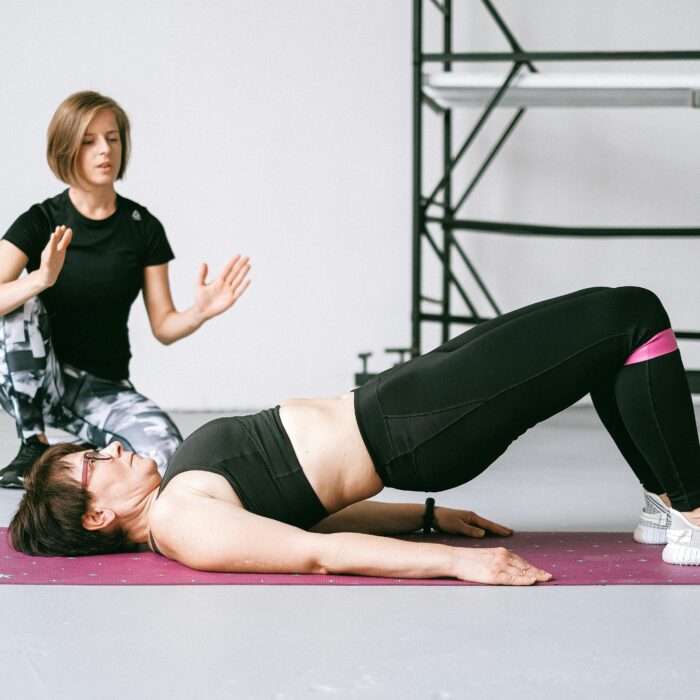
Glute Bridge
Lie on your back with your knees bent and feet flat on the floor, hip width apart. Press through your heels to lift your hips toward the ceiling until your body forms a straight line from shoulders to knees. Squeeze your glutes at the top, hold for 2 seconds, then slowly lower. Perform 15 to 20 repetitions. Glute weakness is one of the most common findings in patients with recurrent sciatica, and bridges address this directly.
Clamshell
Lie on your side with your hips and knees bent at 45 degrees, feet together. Keeping your feet touching, lift your top knee toward the ceiling while keeping your pelvis stable. Don't let your hips roll backward. Lower and repeat for 15 to 20 repetitions on each side. This exercise targets the gluteus medius, which plays a critical role in pelvic stability during walking and single leg activities.
Pallof Press
This anti rotation exercise requires a resistance band anchored at chest height. Stand perpendicular to the anchor point, holding the band with both hands at your chest. Press your hands straight forward, resisting the bands tendency to rotate your torso. Hold for 2 to 3 seconds, then return. Perform 10 repetitions facing each direction. The pallof press trains your core to resist rotational forces, which protects your lumbar spine during daily activities.
| Exercise Category | Example Exercises | When to Start | Frequency |
| Decompression | 90/90 position, prone lying | Acute phase | 2-3x daily |
| Extension | Press ups, prone on elbows | When extension centralizes pain | Every 2 hours |
| Nerve Glides | Seated glide, supine glide | Once acute pain reduces | 3-4x daily |
| Core Strengthening | Dead bug, bird dog | After acute phase resolves | 3x weekly |
| Glute Strengthening | Bridge, clamshell | After acute phase resolves | 3x weekly |
Exercises to Avoid When You Have Sciatica
Knowing what not to do is just as important as knowing what to do. These exercises and movements commonly aggravate sciatica and should be avoided during the acute phase.
Traditional Hamstring Stretches
Any stretch that involves bending forward at the waist to reach your toes, propping your leg on a surface and leaning forward, or pulling your straight leg toward your chest while lying down. These movements put significant tension on the sciatic nerve and can worsen symptoms even though they feel like they should help.
Sit Ups and Crunches
These exercises involve repeated spinal flexion under load, which can increase pressure on a herniated or bulging disc. If your sciatica is disc related, crunches are one of the worst exercises you can do.
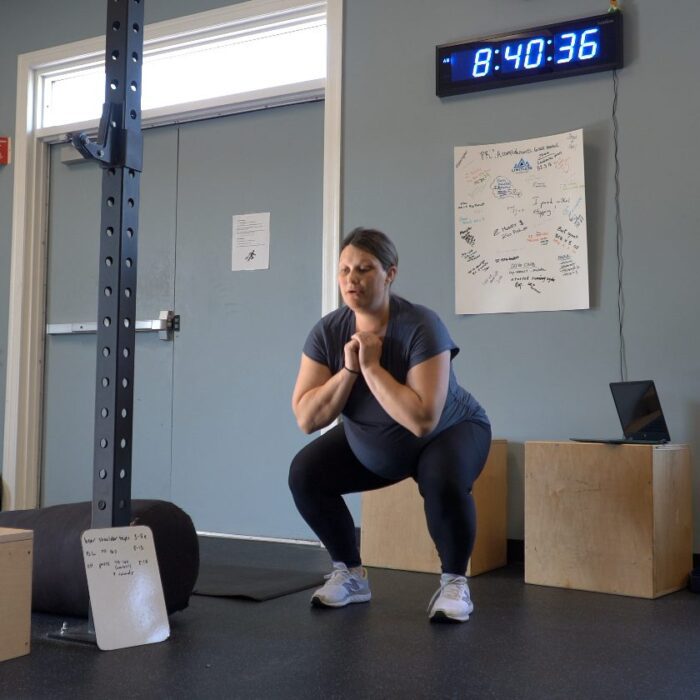
Heavy Deadlifts and Squats
While these exercises are excellent for building strength in a healthy spine, they place significant compressive load on the lumbar vertebrae. During an acute sciatica episode, avoid heavy resistance exercises for the lower body until symptoms resolve.
Prolonged Sitting
This isn't an exercise, but its worth mentioning because it aggravates sciatica as much as any movement. Sitting puts more pressure on the lumbar discs than standing or lying down. If your job requires sitting, take breaks every 20 to 30 minutes to stand and move.
High Impact Activities
Running, jumping, and other high impact activities create repetitive jarring forces through the spine. Wait until your symptoms have fully resolved before returning to these activities.
Frequently Asked Questions About Sciatica Exercises
What is the fastest way to cure sciatica?
There's no instant cure for sciatica, but early intervention with the right exercises can significantly speed recovery. Research shows that patients who begin physical therapy within the first few days of symptom onset have better outcomes than those who wait. For many people, a combination of decompression exercises, nerve glides, and gradual strengthening provides noticeable improvement within 4 to 6 weeks. The most important factor is matching your exercises to your specific condition rather than following generic advice.
Should I stretch if I have sciatica?
It depends on the type of stretch. Traditional forward bending stretches and hamstring stretches can make sciatica worse by increasing tension on the already irritated nerve. Nerve glides, which move the nerve through its pathway without sustained tension, are generally safer and more effective. Extension exercises like the McKenzie press ups work well for disc related sciatica but may not be appropriate for stenosis. The safest approach is to have a physical therapist evaluate your specific condition before starting a stretching routine.
Is walking good for sciatica?
Walking is generally beneficial for sciatica because it promotes circulation, reduces stiffness, and avoids the prolonged sitting that often worsens symptoms. However, if walking increases your leg pain or causes your symptoms to spread further down, it may be too much too soon. Start with short walks on flat surfaces and gradually increase duration as tolerated. Listen to your body and stop if symptoms worsen.
How long does sciatica take to heal?
Most cases of sciatica resolve within 4 to 12 weeks with conservative treatment. Mild cases may improve in a few weeks, while more severe cases involving significant disc herniation can take several months. The good news is that the natural history of sciatica is generally favorable, with research showing that disc material often resorbs on its own over time. Physical therapy and appropriate exercises support this healing process and help prevent recurrence.
When should I see a doctor for sciatica?
Seek medical attention if you experience sudden onset of weakness in your leg, loss of bladder or bowel control, numbness in your groin or inner thighs, or severe pain that doesn't respond to any position changes. These symptoms can indicate a serious condition called cauda equina syndrome, which requires emergency treatment. You should also see a doctor if your symptoms have not improved after 6 weeks of conservative treatment, or if your pain is so severe that it prevents you from sleeping or performing basic daily activities.
Sciatica exercises can provide real relief, but only when they match your specific situation. The press ups that help one person might aggravate another. The stretches your friend swears by might be exactly what you should avoid. This is why physical therapy evaluation matters. A trained therapist can identify whether your sciatica responds better to extension or flexion, design a progression that builds on what works, and catch early signs that you need a different approach.
At Limitless Physical Therapy, we specialize in spinal conditions like sciatica. Our team has helped patients across Victor, Brighton, Greece, and Cortland get back to running, lifting, playing with their kids, and doing all the activities that sciatica had taken away. We don't just give you a list of exercises and send you home. We figure out what's actually causing your pain and build a plan around that.
You don't have to keep cycling through internet advice hoping something sticks. Ready to live a life without limits? Schedule an evaluation and let's get you moving without pain again.